
Bathroom Renovation Planning: What to Decide Before Work Begins

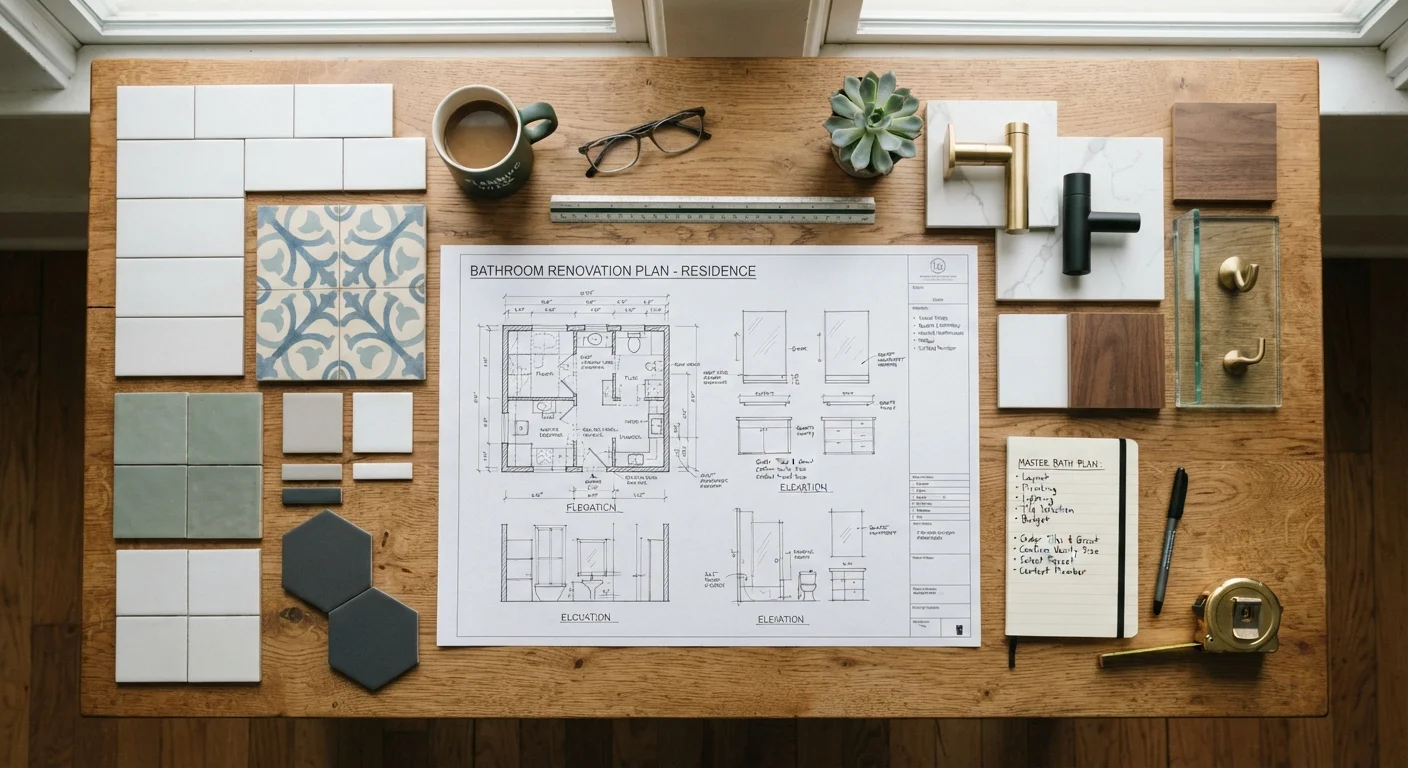
Photo: findbestways.com editorial
Key Takeaways
- Decide on your layout before ordering any fixtures, since moving drains and supply lines adds significant cost.
- Most bathroom remodels require at least one permit; check with your local building department before work starts.
- Fixture installation follows a strict sequence: rough-in plumbing and electrical must pass inspection before walls close.
- Setting a realistic contingency budget of 15 to 20 percent helps absorb surprises found behind old walls.
- A detailed scope document shared with every contractor reduces miscommunication and change-order disputes.
Why planning decisions made early matter most
A bathroom remodel that stalls mid-project almost always traces back to a decision that should have been made before a single tile was removed. Contractors price work based on assumptions; when those assumptions change, costs and timelines shift. Locking down your key choices first gives every trade a clear target and keeps the project moving in one direction.
The decisions that cost the most to reverse are the structural ones: where the toilet, shower, and vanity sit relative to existing drain and vent locations. Moving a drain even a foot often means opening the subfloor, potentially rerouting a vent stack, and scheduling additional inspections. Keeping fixtures in their current positions is not a creative limitation; for many homeowners it is a straightforward way to control costs without sacrificing the finished look.
Layout, permits, and the order work happens
Before you talk to a single contractor, draw a rough floor plan that shows where existing plumbing and electrical are located. Your current floor plan is your cost baseline. Any change to that baseline needs a plumber's input on feasibility and a realistic price before you commit.
Permits are not optional on most bathroom work. In the United States, work that involves moving or adding plumbing, altering electrical circuits, or making structural changes to walls typically requires a permit and inspection. Requirements vary by municipality, so contact your local building or permitting department to confirm what applies to your project. Unpermitted work can complicate a future home sale and may void homeowner's insurance coverage for related damage.
Once permits are in hand, work generally follows this sequence: demolition, rough-in plumbing, rough-in electrical, inspections, waterproofing, tile backer installation, tile, fixtures, and finish electrical. Skipping ahead creates problems. For example, installing a vanity before tile is finished can damage the cabinet base and block access to plumbing connections.
Load-bearing walls require professional assessment
If your bathroom shares a wall with a bedroom or hallway, confirm with your contractor whether any planned changes affect load-bearing framing. That determination should come from a licensed contractor or structural professional, not from visual inspection alone.
Decisions to make before work begins
Fix your fixture locations before finalizing your budget
Choose all tile and fixtures before scheduling rough-in work
Confirm your ventilation plan meets code before selecting a fan
Set aside a contingency fund before signing any contract
Decide on storage before finalizing wall and door placement
Getting started without wasting money
Before soliciting bids, write a one-page scope document that lists every change you want, the fixtures you have chosen (or the specifications you require), and any constraints like ceiling height or door swing. Give this same document to every contractor you contact. Bids built from the same scope are far easier to compare than bids where each contractor made different assumptions.
Get at least three bids for any project that involves licensed trades. Ask each contractor to itemize labor and materials separately. That breakdown tells you where the money is going and makes it easier to identify if one bid is unusually low because it omits something the others included.
The content provided on our blog site traverses numerous categories, offering readers valuable and practical information. Readers can use the editorial team’s research and data to gain more insights into their topics of interest. However, they are requested not to treat the articles as conclusive. The website team cannot be held responsible for differences in data or inaccuracies found across other platforms. Please also note that the site might also miss out on various schemes and offers available that the readers may find more beneficial than the ones we cover.