
Grout vs. Caulk: When to Use Each in Your Bathroom or Kitchen

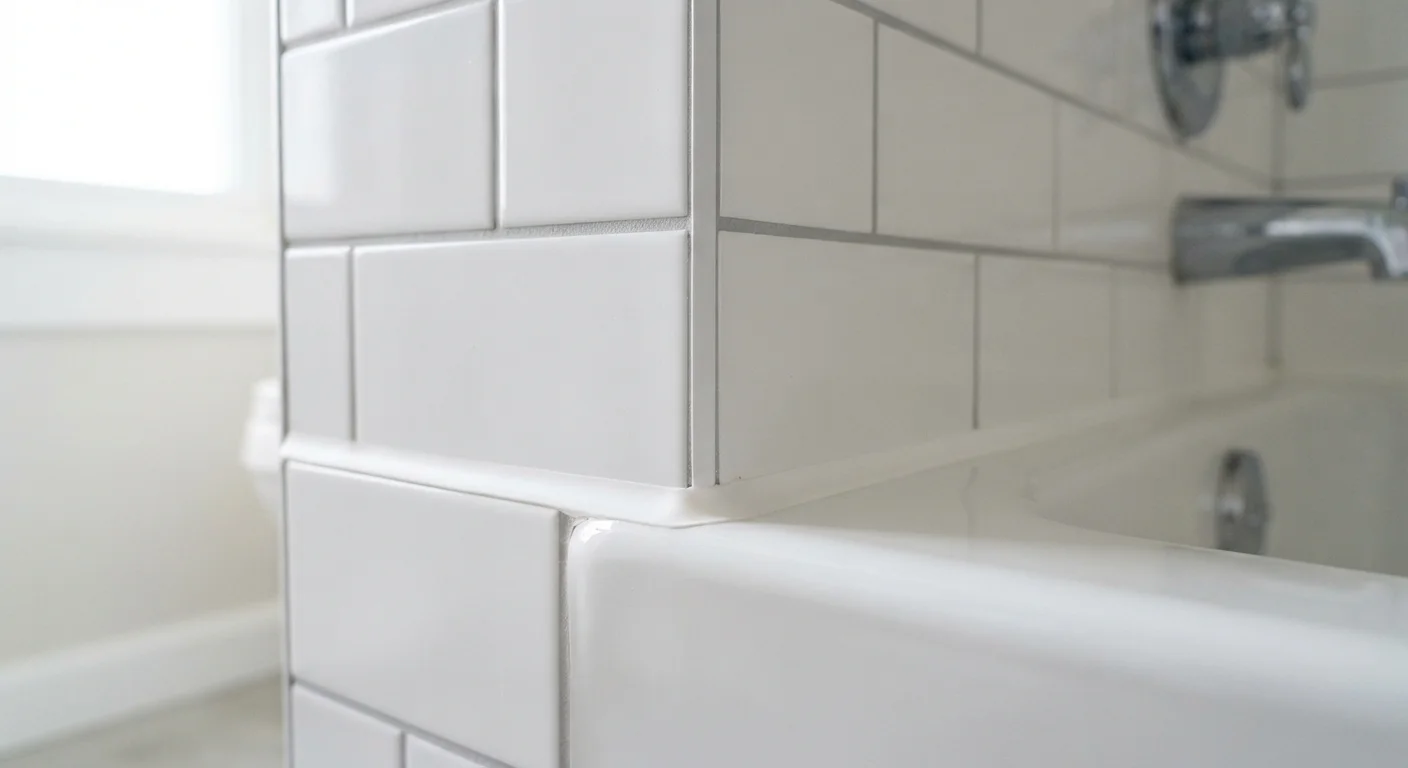
Photo: findbestways.com editorial
Key Takeaways
- Grout belongs in tile-to-tile joints on flat, stable surfaces; caulk belongs at corners and transitions.
- Grout is rigid and will crack if used where two surfaces meet at an angle or where movement occurs.
- Caulk is flexible and waterproof, making it the correct choice around tubs, sinks, and shower bases.
- Using grout at a corner instead of caulk is one of the most common causes of bathroom water damage.
- Both materials come in sanded and unsanded (or silicone) formulations suited to different gap widths and surfaces.
What each material actually does
Grout is a cement-based (or sometimes epoxy-based) filler that hardens completely after application. It fills the gaps between tiles, locks them in place relative to one another, and creates a cleanable surface. Because it cures rigid, grout transfers stress directly. On a flat, stable surface, that rigidity is an asset. On a joint that flexes, it becomes a liability: the material cracks.
Caulk is a polymer sealant, most commonly acrylic-latex or silicone. It stays slightly pliable after curing, which allows it to compress and stretch as surfaces move. That flexibility also makes caulk waterproof in a way grout is not. Standard cement grout is porous and will absorb water unless sealed; caulk forms a continuous barrier from day one.
The two materials are often confused because they come in similar colors and are both applied with a caulking gun or trowel. The difference is structural, not cosmetic.
| Criterion | Grout | Caulk |
|---|---|---|
| Flexibility after curing | Rigid | Flexible |
| Water resistance | Porous unless sealed | Waterproof |
| Best location | Tile-to-tile joints, flat surfaces | Corners, transitions, fixture edges |
| Common formulations | Sanded, unsanded, epoxy | Silicone, acrylic-latex |
| Handles surface movement | No, will crack | Yes, stretches and compresses |
| Typical lifespan in wet areas | 10-15 years with sealing | 5-10 years (silicone lasts longer) |
| Removal process | Grout saw or oscillating tool | Utility knife and solvent |
Where grout belongs
Use grout for the joints between tiles on any continuous flat surface: shower walls, backsplash walls, floor fields, and countertop surfaces. These joints sit in a single plane and move as one unit. The tile and substrate expand and contract together, so a rigid filler does not crack under normal conditions.
For joints up to 1/8 inch wide, unsanded grout is standard. For wider joints (typically 1/8 inch and above), sanded grout provides the bulk needed to prevent shrinkage cracking. Epoxy grout, a less common option, resists staining and chemical exposure and is worth considering for kitchen floors or commercial-style backsplashes, though it is harder to work with.
One detail many homeowners miss: grout also belongs at the base of a floor tile installation where tiles meet other tiles, but not where the tile field meets the baseboard or a transition strip. Those edges require caulk.
Where caulk belongs
Caulk belongs anywhere two different surfaces or two different planes meet. The practical locations in a bathroom or kitchen are:
- Inside corners of tiled showers and tub surrounds, where two walls meet at 90 degrees
- The perimeter joint where tile meets a tub, shower base, or shower pan
- The joint where a tile backsplash meets a countertop
- Around the perimeter of a sink, whether drop-in or undermount
- Where a tile floor meets a wood baseboard or door threshold
Silicone caulk is the most durable choice for wet areas because it does not shrink, does not absorb water, and resists mold better than acrylic formulations over time. Acrylic-latex caulk is easier to smooth and clean up with water, but it degrades faster in a shower environment. For the tub-to-tile joint, silicone is worth the extra effort.
When old caulk needs replacing
Color-matching caulk to existing grout is straightforward: most grout manufacturers sell matching caulk in the same color line. Ask for it by the grout color name when purchasing supplies.
The corner rule and why it matters
The single most common tiling mistake is grouting inside corners. When a tile installer fills a 90-degree shower corner with grout, the result looks fine for a few months. Then the grout cracks. Water enters the crack, reaches the substrate behind the tile, and begins to break down the wall board. By the time the damage is visible, it has often spread well beyond the cracked corner.
The reason grout always cracks at corners is physics. Two walls are attached to different studs and move independently, even by fractions of a millimeter. Rigid grout cannot accommodate that movement. Caulk, applied at the same joint, stays intact because it flexes with the wall movement.
Fixing a grouted corner means removing all the grout from the joint with an oscillating tool or grout saw, cleaning the gap thoroughly, and applying silicone or sanded caulk in its place. It takes about an hour and costs very little. Fixing the water damage behind the wall costs considerably more.
Applying each material correctly
For grout, mix the powder to a peanut-butter consistency (or open pre-mixed grout), spread it diagonally across the tile surface with a rubber float, and pack it firmly into the joints. Remove the excess before it dries, then clean the haze from the tile surface with a damp sponge in a circular motion. Allow the grout to cure for the time specified on the packaging before exposing it to water.
For caulk, preparation matters more than application technique. The joint must be dry, clean, and free of old caulk, soap scum, or mold. Apply painter's tape along both sides of the joint for a clean edge. Cut the caulk tube at a 45-degree angle to match the joint width, apply a steady bead, and smooth it immediately with a wet finger or a caulk tool. Remove the tape before the caulk skins over. Silicone caulk typically needs 24 hours before water exposure; check the product label for the specific cure time.
The content provided on our blog site traverses numerous categories, offering readers valuable and practical information. Readers can use the editorial team’s research and data to gain more insights into their topics of interest. However, they are requested not to treat the articles as conclusive. The website team cannot be held responsible for differences in data or inaccuracies found across other platforms. Please also note that the site might also miss out on various schemes and offers available that the readers may find more beneficial than the ones we cover.