
Home Weatherization: Stopping Drafts, Heat Loss, and High Energy Bills

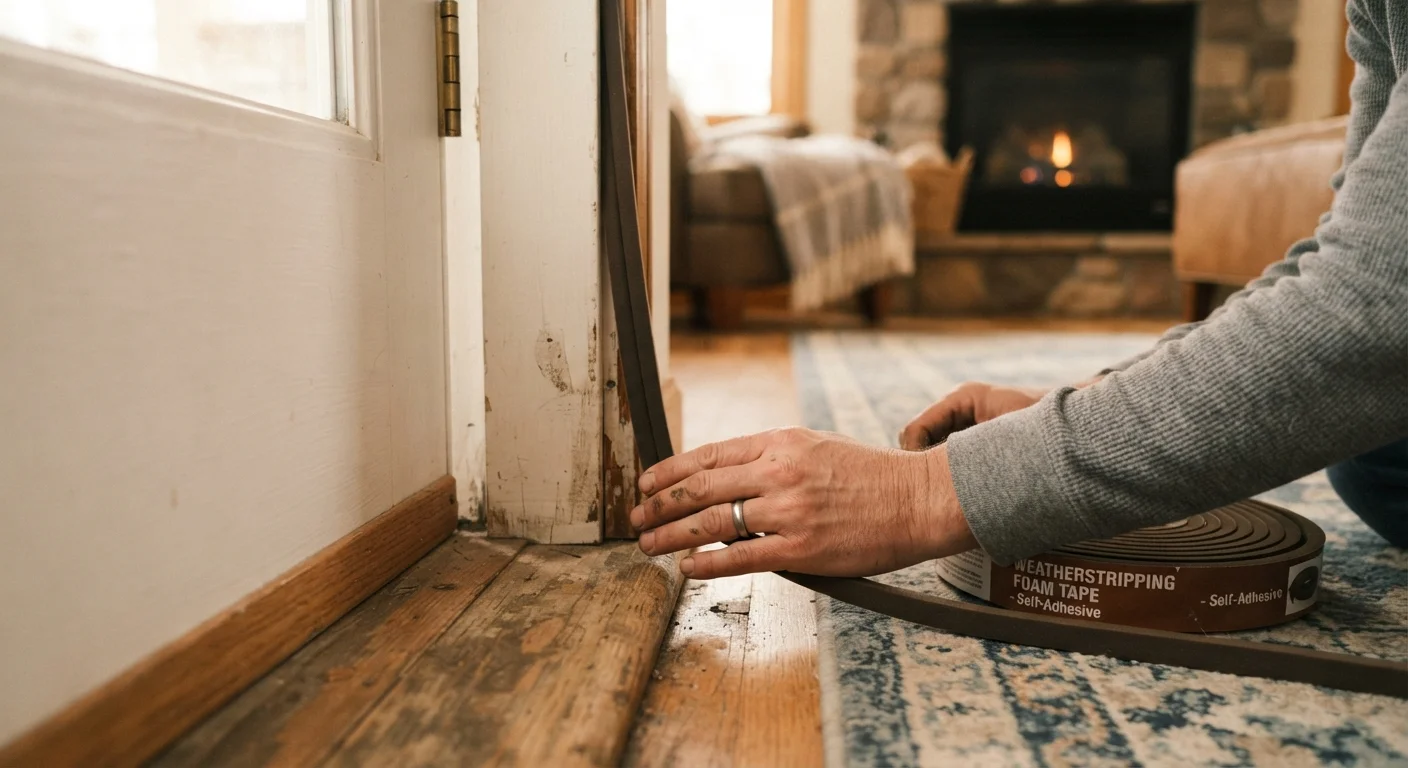
Photo: findbestways.com editorial
Key Takeaways
- Air leaks through small gaps around doors, windows, and penetrations can account for 25 to 40 percent of heating and cooling loss in a typical home.
- A simple walk-through with a candle or incense stick can locate most major drafts before you spend anything.
- Weatherstripping and caulk are low-cost fixes that most homeowners can complete in a weekend.
- The attic is often the single biggest source of heat loss and should be addressed before finishing walls or floors.
- Ducts in unconditioned spaces such as crawl spaces can lose a significant share of conditioned air before it reaches living areas.
- A certified home energy auditor can use a blower-door test to find leaks invisible to a casual inspection.
Why air leaks matter more than insulation R-value
Most homeowners think about insulation when they hear 'heat loss,' but insulation only slows conductive heat transfer through solid materials. Air leaks are a separate problem: gaps and cracks let conditioned air escape and outside air rush in, bypassing insulation entirely. The U.S. Department of Energy estimates that air infiltration accounts for 25 to 40 percent of heating and cooling energy use in a typical American home.
R-value (a measure of insulation's resistance to heat flow) matters, but a wall packed with high-R insulation still performs poorly if air moves freely around electrical outlets, plumbing penetrations, or an attic hatch that sits slightly crooked. Addressing air sealing before adding more insulation is the correct order of operations.
25-40%
Heating and cooling energy lost to air infiltration
U.S. Department of Energy estimate for a typical American home.
R-38
Minimum attic insulation for most U.S. climate zones
U.S. Department of Energy recommendation; exact target varies by climate zone.
$200-$600
Typical DIY cost for basic door and window weatherization
General industry estimate for materials in an average single-family home; actual costs vary by home size and condition.
Finding drafts before you spend a dollar
On a cold, windy day, move slowly around the interior perimeter of your home holding a lit incense stick or a thin strip of tissue paper near suspect areas. Watch for the smoke or paper to deflect. Common locations include the bottom edge of exterior doors, window frames where the sash meets the sill, electrical outlets on outside walls, recessed light fixtures in ceilings below an attic, and the joint where the framed wall meets the foundation (the sill plate).
A hand held against these spots can also detect temperature differences. Check the attic hatch: press your palm flat against it and notice whether it feels significantly cooler than the surrounding ceiling. If it does, air is moving through it.
Write down every location you find. Prioritizing by severity, not by convenience, gives you the best return on the time you invest in repairs.
Sealing doors and windows
Weatherstripping seals the movable joint between a door or window sash and its frame. Common types include foam tape (inexpensive, best for low-traffic windows), V-strip or tension seal (durable, good for the sides of double-hung windows and door stops), and door sweeps (for the gap between the door bottom and the threshold).
Before installing new weatherstripping, remove any old material and clean the surface. Measure the full perimeter of the door or window opening, not just the side where you feel the draft, because air finds the path of least resistance and the real leak may not be where you first felt it.
Caulk handles the fixed joints: the seam between a window frame and exterior siding, or the gap where a door frame meets the rough framing. Use paintable latex caulk for interior work and a siliconized or 100-percent silicone product for exterior joints exposed to moisture and temperature swings.
Test before buying weatherstripping in bulk
Attic air sealing and insulation basics
Heat rises. In winter, warm air from living spaces moves upward and escapes through any gap in the ceiling plane into the attic, a process called the stack effect. The attic floor (which is the ceiling of the floor below) is often riddled with penetrations: top plates of interior walls, plumbing vent pipes, electrical wires, recessed lights, and the framing around a whole-house fan or attic hatch.
Each of these gaps should be sealed with either caulk (for small gaps around wires and pipes) or rigid foam board plus canned spray foam (for larger framing gaps and the attic hatch perimeter). Recessed can lights that are not rated for insulation contact require special sealed covers before insulation is added on top of them.
Only after gaps are sealed does adding insulation make full sense. The U.S. Department of Energy recommends that most climate zones maintain at least R-38 in the attic, though the correct target depends on your specific climate zone.
Recessed lights and fire ratings
Pipes, ducts, and overlooked gaps
Supply and return air ducts that run through unconditioned spaces (crawl spaces, unfinished basements, garages) can leak conditioned air before it ever reaches a register. A duct that feels warm to the touch on a cold day in an unheated crawl space is delivering heat to the crawl space, not to the room. Sealing duct joints with mastic sealant (a paste-like compound designed for ducts) or metal-backed tape addresses this. Standard cloth duct tape degrades and is not the right material for this job.
Plumbing penetrations through exterior walls or floor plates are another common source of infiltration. The gap around a pipe where it exits through an exterior wall can be sealed with canned spray foam, though you should confirm the product is appropriate for the gap size (some expanding foams can bow thin framing if used in confined spaces).
Fireplace dampers that do not seat tightly are a significant source of air loss when the fireplace is not in use. Inspect the damper handle for free movement and check whether the damper closes fully. Inflatable chimney balloons are a low-cost option for fireplaces used infrequently.
When to call a professional energy auditor
A visual inspection finds many major leaks, but not all. A certified home energy auditor uses a blower-door test: a calibrated fan is mounted in an exterior door opening and depressurizes the house to a standard pressure difference. Under those conditions, air rushes in through every remaining leak, and the auditor uses an infrared camera or smoke pencils to map them precisely.
Blower-door tests are particularly useful in homes with complex roof lines, multiple additions, or finished spaces over garages where visual access is limited. Many state and utility weatherization programs offer subsidized audits, and federal residential energy efficiency tax credits may offset a portion of qualified improvement costs. Check with your utility and a tax professional for current program details, since program availability and amounts change.
For homeowners who have already done the visible work and still see high energy bills, a professional audit is the logical next step. It produces a prioritized list of remaining improvements with projected energy savings for each, so you spend where the return is greatest.
The content provided on our blog site traverses numerous categories, offering readers valuable and practical information. Readers can use the editorial team’s research and data to gain more insights into their topics of interest. However, they are requested not to treat the articles as conclusive. The website team cannot be held responsible for differences in data or inaccuracies found across other platforms. Please also note that the site might also miss out on various schemes and offers available that the readers may find more beneficial than the ones we cover.