
Morning Person vs. Night Owl: Working With Your Natural Energy Rhythm

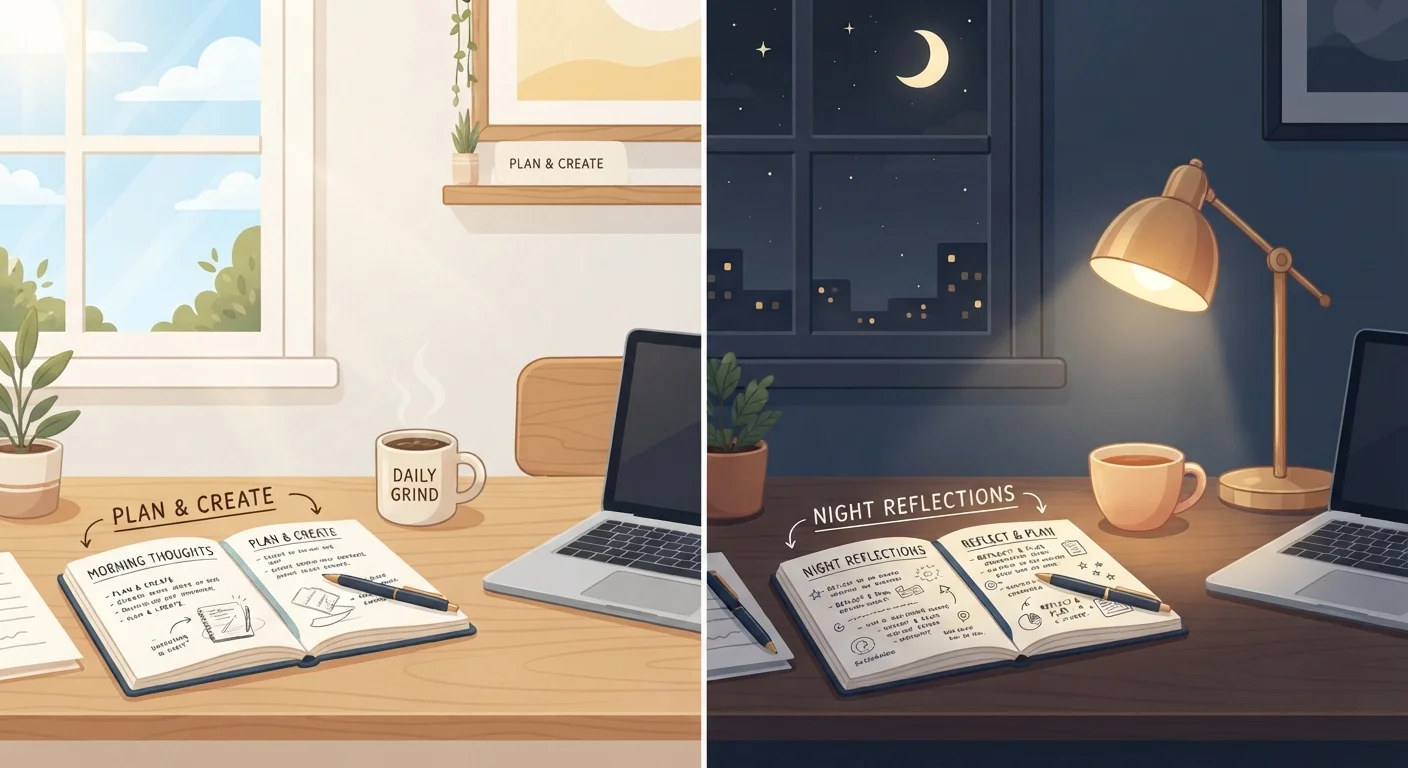
Photo: findbestways.com editorial
Key Takeaways
- Chronotype is a biological tendency, not a habit you can simply override through willpower.
- Aligning demanding tasks with your natural energy peak can improve focus and reduce mental fatigue.
- Late chronotypes face a structural mismatch with standard work and school schedules, sometimes called social jetlag.
- Light exposure and consistent sleep timing are the two most evidence-supported tools for managing your body clock.
- Neither chronotype is healthier by default; outcomes depend largely on how well your schedule fits your biology.
What chronotype actually means
Chronotype refers to the biological timing of your sleep-wake cycle, driven largely by genetics and the internal circadian clock. It is not simply a preference or a bad habit. Research published in journals such as Sleep Medicine Reviews has shown that circadian timing varies measurably across individuals, with early chronotypes naturally feeling alert in the morning and late chronotypes reaching peak alertness several hours later in the day.
Chronotype also shifts across a lifetime. Teenagers tend to run later than children or adults, a pattern linked to changes in melatonin timing during puberty. Adults generally shift earlier as they age. This means the night owl tendencies many people have in their twenties are partly biological, not purely a lifestyle choice.
Understanding your chronotype matters because it shapes when your body temperature rises, when cortisol peaks in the morning, and when your brain is most primed for focused work. Fighting those rhythms consistently does not make them go away; it creates cumulative fatigue instead. For more on how irregular timing compounds over a week, see why your sleep schedule falls apart on weekends.
How each type performs across the day
Early chronotypes typically show their strongest cognitive performance, including working memory and sustained attention, in the late morning. By early afternoon, performance tends to dip, and by evening many early types report feeling mentally flat even if they are not sleepy.
Late chronotypes follow the inverse curve. Morning tasks feel labored, with slower reaction times and lower motivation. Performance rises through the afternoon and often peaks between 9 p.m. and midnight. This is not laziness; it reflects when body temperature and alertness hormones are biologically timed to be highest.
| Criterion | Morning person | Night owl |
|---|---|---|
| Peak cognitive window | Late morning (roughly 9 a.m. to noon) | Evening (roughly 8 p.m. to midnight) |
| Alignment with standard schedules | Natural fit with early work/school | Structural mismatch; social jetlag common |
| Morning alertness | High on waking | Low; takes hours to ramp up |
| Evening energy | Drops by early evening | Sustained well into the night |
| Flexibility with schedule changes | Adapts more easily to earlier shifts | Adapts more easily to later shifts |
| Chronotype driver | Genetics, age, light exposure | Genetics, age, light exposure |
The practical consequence is that a night owl forced into a 7 a.m. meeting is not operating at the same cognitive level as a morning person in that same meeting. That gap matters for tasks requiring judgment, creativity, or detail work.
Social jetlag and why it costs you
Social jetlag is the term researchers use for the mismatch between your biological clock and your social schedule, most visible in the difference between when you sleep on work days versus free days. A late chronotype who sleeps from midnight to 8 a.m. on weekends but must wake at 6 a.m. on weekdays accumulates a chronic deficit similar in some ways to mild, recurring jet lag.
Studies have associated persistent social jetlag with higher rates of daytime sleepiness, mood disruption, and difficulty concentrating, though research in this area continues to develop. The cost falls harder on late chronotypes because most schools and workplaces are designed around early schedules.
~40%
Adults with a late or intermediate chronotype
Chronobiology research estimates that roughly 40 percent of adults have late or intermediate chronotypes, meaning standard early schedules create a mismatch for a large share of the population.
1-2 hours
Average social jetlag in late chronotypes
Research by Till Roenneberg and colleagues found that many late chronotypes accumulate one to two hours of social jetlag on weekday mornings compared to their free-day sleep timing.
50%+
Heritability of chronotype
Twin studies suggest chronotype is more than 50 percent heritable, supporting the view that it is a biological trait rather than purely a behavioral habit.
If you cannot shift your work hours, two practical tools can reduce the mismatch: consistent wake times across weekdays and weekends (which anchors the clock), and morning light exposure, which signals the circadian system to shift earlier over time. Both are low-cost and have solid mechanistic support in circadian biology.
Matching your tasks to your energy
Rather than trying to rewire your chronotype, a more sustainable approach is scheduling around it. Place your most demanding cognitive work in your peak window. For early types, that means tackling analysis, writing, or difficult decisions before noon. For late types, those same tasks belong in the afternoon or evening when they are accessible.
Routine and low-stakes tasks, such as answering email, running errands, or administrative work, fit naturally into your off-peak hours. This is not about being rigid; it is about not wasting your sharpest mental state on work that does not require it.
Morning types who want to build a consistent early routine can find practical structure in evidence-informed morning habits. Night owls with more schedule control can apply the same logic in reverse, anchoring their deep-work blocks to evening hours and using mornings for lighter tasks.
One thing both types benefit from is a weekly planning session. A Sunday reset that maps the coming week against your known energy patterns means fewer reactive decisions during the week itself. See how to build a weekly reset routine for a practical framework.
This article is for general informational purposes only. If you have concerns about sleep disorders, excessive daytime fatigue, or other health issues related to sleep, consult a qualified healthcare professional.
The content provided on our blog site traverses numerous categories, offering readers valuable and practical information. Readers can use the editorial team’s research and data to gain more insights into their topics of interest. However, they are requested not to treat the articles as conclusive. The website team cannot be held responsible for differences in data or inaccuracies found across other platforms. Please also note that the site might also miss out on various schemes and offers available that the readers may find more beneficial than the ones we cover.