
Brake Pad Wear: What the Signs Look Like and Why They Matter

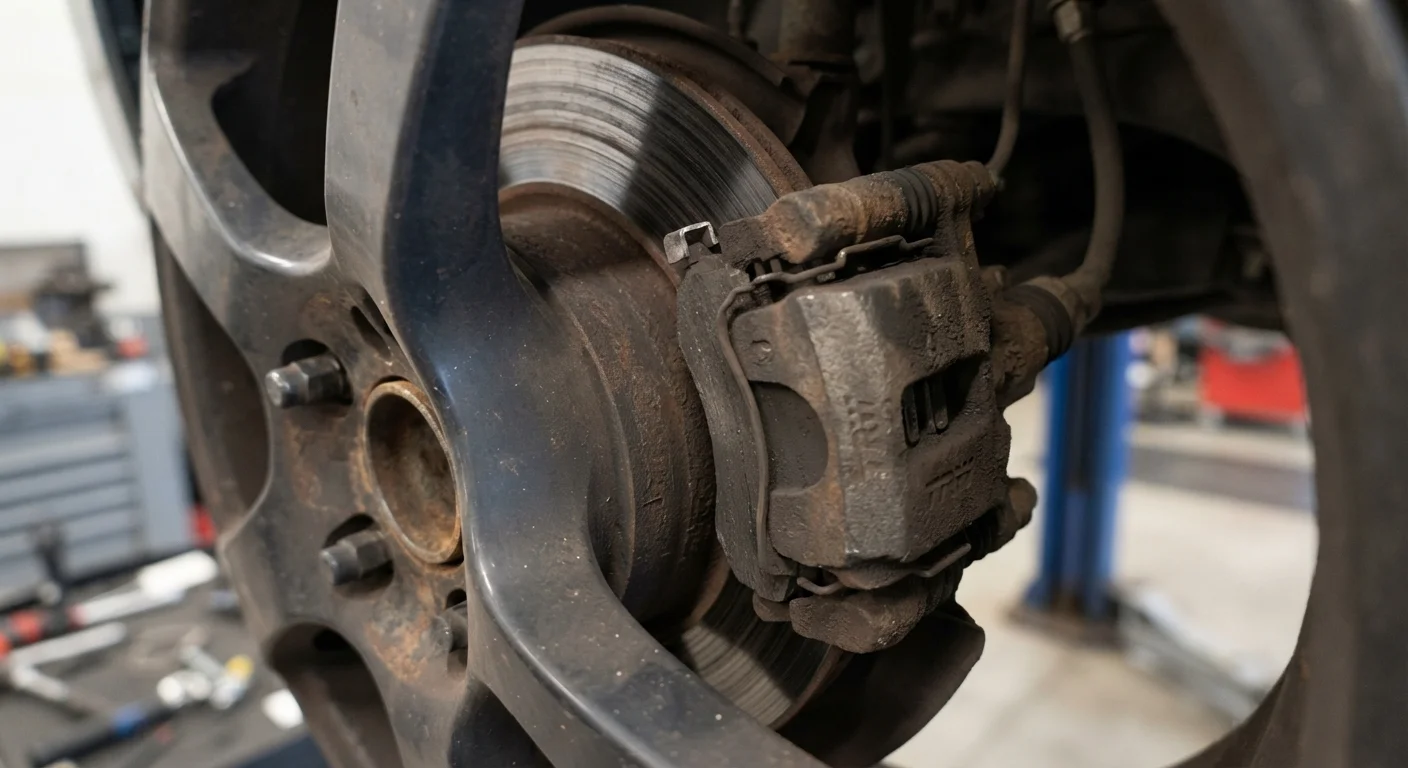
Photo: findbestways.com editorial
Key Takeaways
- A high-pitched squeal while braking usually means the wear indicator has contacted the rotor.
- Grinding sounds suggest metal-on-metal contact and require immediate attention.
- Pulling to one side while braking can point to uneven pad wear across the axle.
- Brake pads on the same axle should always be replaced in pairs.
- Ignoring worn pads increases stopping distances and can damage the rotor, raising repair costs.
The sounds that tell you pads are wearing
Two sounds from the brakes each mean something different, and mixing them up can lead to delayed repairs.
A high-pitched squeal when you press the brake pedal is usually the wear indicator doing its job. Most brake pads have a small metal tab built into the friction material. When the pad thins to a set point, that tab contacts the spinning rotor and produces a squeal. Think of it as a designed-in alarm. The brakes still work, but the pad has limited life left.
A grinding or growling sound is more serious. It means the friction material is gone and metal is contacting metal. At this stage, every stop is scoring the rotor surface. Rotors are significantly more expensive to replace than pads, so grinding sounds warrant same-day attention, not a note on the calendar.
Some drivers notice squealing only when braking lightly, especially after the car sat overnight in damp conditions. Light surface rust on the rotor can cause a brief squeal that clears after a few stops. If the sound disappears quickly and does not return during braking, that is typically not a pad-wear issue. Persistent squealing during normal braking is the signal to act on.
Ask about brake inspection at every oil change
Physical and handling signs
Not all brake wear announces itself with noise. Several other signals show up through feel and visual inspection.
Pulling to one side while braking points to uneven pad wear. If one pad on an axle is thinner than the other, braking force is unbalanced, and the car drifts toward the side with more friction. Pulling can also come from a stuck caliper, which is the hydraulic clamp that pushes the pad against the rotor. Either way, the cause needs diagnosis before it gets worse.
Vibration or pulsing through the brake pedal often means the rotor surface has become uneven, sometimes called rotor warp. Heavily worn or overheated pads can accelerate this by transferring uneven heat to the rotor. The pedal feedback will feel like a rhythmic push-back when you apply pressure.
Increased stopping distance is harder to notice gradually, because drivers unconsciously adjust how early they begin braking. If a vehicle that once stopped confidently now feels like it takes more road to slow down, the pads may be worn or the brake system may have another issue that needs professional attention.
Visually, you can often inspect pad thickness through the wheel spokes. The pad should be visible pressing against the rotor, with at least 1/4 inch of friction material remaining. If what you see looks paper-thin, schedule an inspection.
Dashboard warnings and when to act
Many vehicles built in the past decade include an electronic pad wear sensor that triggers a dashboard light when thickness drops below a threshold. This light is separate from the ABS warning light. If your dashboard shows a brake warning symbol, check your owner's manual to determine whether it indicates low pad life, a hydraulic pressure issue, or the parking brake being engaged.
For a broader look at what dashboard symbols mean across different systems, see our guide to car warning lights.
Not every vehicle has electronic wear sensors. On cars without them, the mechanical squeal indicator is your only built-in alert, which is why learning to recognize the sounds matters.
When any brake warning light appears, the correct response is to have the system inspected before the next significant drive. A brake warning is not like a tire pressure light that can wait a few days.
What happens if you wait too long
Worn pads left in place do not just wear further: they let the metal backing plate contact the rotor on every stop. Rotors that are scored or grooved deeply enough cannot be resurfaced and must be replaced. A job that would have cost the price of two sets of pads can become a job that includes two new rotors, which often doubles or triples the total cost.
Severely worn pads also extend stopping distances. In a situation where a driver needs to stop quickly, compromised brakes can mean the difference between avoiding a collision and not.
Brake pads on the same axle should always be replaced as a pair, even if one side appears to have more wear. Installing one new pad and one old pad creates the same imbalance that causes pulling.
30K-70K
Typical brake pad service life (miles)
Range reflects differences in driving style, vehicle type, and pad material; city driving falls toward the lower end.
3 mm
Minimum safe pad thickness before replacement
Most mechanics recommend replacement at or before this point; many manufacturer specs align with this threshold.
2x-3x
Cost multiplier when rotors also need replacement
Delaying pad replacement until metal contacts rotor typically adds rotor replacement to the repair, significantly raising the total.
Frequently Asked Questions
The content provided on our blog site traverses numerous categories, offering readers valuable and practical information. Readers can use the editorial team’s research and data to gain more insights into their topics of interest. However, they are requested not to treat the articles as conclusive. The website team cannot be held responsible for differences in data or inaccuracies found across other platforms. Please also note that the site might also miss out on various schemes and offers available that the readers may find more beneficial than the ones we cover.