
Understanding Your Car's Warning Lights Beyond the Check Engine Symbol

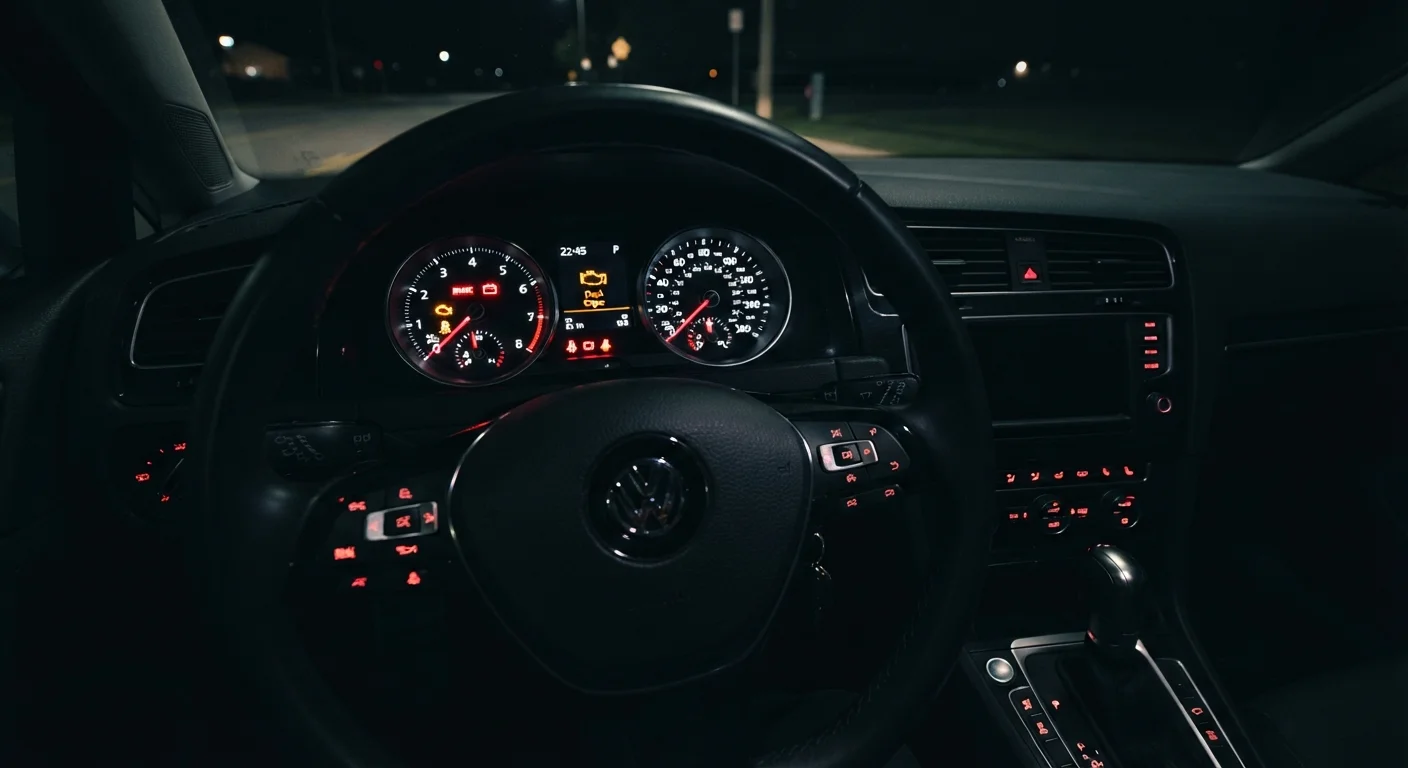
Photo: findbestways.com editorial
Why warning lights matter more than most drivers think
Most drivers recognize the check engine light. Far fewer know what the battery symbol, the thermometer icon, or the exclamation point inside a horseshoe shape are telling them. Ignoring those lights doesn't make the problem go away; it usually makes the repair more expensive.
Modern vehicles use a standardized set of warning symbols governed by the Society of Automotive Engineers (SAE) and the International Organization for Standardization (ISO). That means a red oil can icon means the same thing on a pickup truck as it does on a compact sedan. The color of the light gives you the first clue about urgency.
- Red means stop or act immediately. The system flagging you has a condition that can cause damage or create a safety risk if you keep driving.
- Amber or yellow means investigate soon. The vehicle is still drivable in most cases, but the issue needs attention within a reasonable timeframe.
- Green or blue confirms an active system, such as high beams or a turn signal. No action needed.
Color alone won't tell you everything, though. Context and the specific symbol together determine your next move. See our complete used-car maintenance guide for broader context on keeping any vehicle in good shape.
The warning lights most drivers misread or ignore
| Warning light color: red | Stop or act immediately (SAE/ISO standardized instrument cluster color coding) |
| Warning light color: amber/yellow | Investigate soon; vehicle usually drivable (SAE/ISO standardized instrument cluster color coding) |
| Diagnostic scan standard | OBD-II (required on U.S. vehicles since 1996) (U.S. EPA mandate, effective 1996 model year) |
| TPMS required on | All new U.S. passenger vehicles since 2008 (TREAD Act, U.S. federal requirement) |
| Low oil pressure risk | Engine damage possible within minutes of running (General automotive engineering guidance) |
| Symbol standardization | Governed by SAE and ISO international standards (SAE J1344 / ISO 2575) |
Oil pressure warning
The red oil can icon (sometimes with a drip) signals low oil pressure, not necessarily low oil level. Low pressure means oil isn't circulating well enough to lubricate engine components. Pull over safely and shut off the engine as soon as you can. Running an engine with low oil pressure can cause permanent internal damage within minutes. Check the oil level once the engine is off. If the level is fine and the light stays on, the vehicle needs a mechanic before it moves again.
Temperature warning
A thermometer icon with wavy lines beneath it means the engine is overheating. Pull over, turn off the engine, and wait for it to cool before opening the hood. Never open a hot radiator cap. Overheating can warp cylinder heads and destroy head gaskets, both expensive repairs. Coolant level, a failed thermostat, or a leaking hose are common causes. For background on coolant maintenance, our fluid myths article covers what drivers often get wrong.
Battery / charging system
A battery symbol means the charging system isn't maintaining voltage. The alternator may be failing, or there's a loose or corroded connection. The vehicle will continue running on battery power for a limited time, but once battery voltage drops far enough, the car will stall. Head to a shop promptly rather than running other errands first.
Brake system warning
This one can mean two different things. If the parking brake is engaged, releasing it will turn the light off. If it stays on with the parking brake released, the brake fluid level may be low, which can indicate a leak or worn brake pads. Either way, this light warrants immediate attention. Brake pad wear has other early signs worth knowing alongside this light.
Tire pressure (TPMS)
The exclamation point inside a horseshoe shape is the tire pressure monitoring system (TPMS) alert. It comes on when one or more tires drops significantly below the recommended pressure, or in some vehicles, when pressure is too high. Check all four tires with a gauge; don't rely on visual inspection. Underinflated tires affect handling, fuel economy, and tire lifespan. Your door jamb sticker lists the correct pressure for your specific vehicle. For more on reading tire data, see how to read your tire sidewall.
Traction control / stability control
A flashing car with skid lines means the system is actively working, which is normal on slippery roads. A solid light with an "OFF" indicator means the system has been manually disabled or has a fault. A fault in traction or stability control should be diagnosed; these systems reduce rollover and skid risk in emergencies.
When to stop driving versus when to schedule a visit
Red lights that involve oil pressure, engine temperature, or brake system failure are stop-now situations. Continuing to drive risks damage that exceeds the tow bill by a wide margin.
Amber lights for TPMS, check engine, or traction control faults are generally schedule-soon situations. You have time to drive to a shop safely, but waiting weeks isn't a good idea. A diagnostic scan (often called an OBD-II scan) reads the fault code stored in the vehicle's computer and gives a mechanic a starting point. Many auto parts retailers offer free code reads, though interpreting the code correctly still requires mechanical judgment.
One practical rule: if a warning light appears alongside unusual sounds, smells, or changes in how the vehicle handles, treat it as urgent regardless of color. Dashboard systems flag known faults; they don't capture every possible failure mode.
OBD-II
On-Board Diagnostics II, a standardized system built into vehicles sold in the U.S. since 1996 that monitors engine and emissions components and stores fault codes readable by a scan tool.
TPMS
Tire Pressure Monitoring System, a sensor-based system that alerts the driver when tire pressure drops below a threshold. Required on all new U.S. passenger vehicles since the 2008 model year.
Oil pressure
The force that pushes oil through an engine's lubrication passages. Low oil pressure means insufficient lubrication, not necessarily a low fluid level, and can cause rapid internal engine damage.
Alternator
A generator driven by the engine that recharges the battery while the vehicle runs. A failing alternator causes the charging system warning light and will eventually leave the battery unable to start the car.
Stability control
An active safety system that detects and reduces loss of traction or vehicle skidding by selectively applying brakes and adjusting engine output. Also called ESC (Electronic Stability Control).
The content provided on our blog site traverses numerous categories, offering readers valuable and practical information. Readers can use the editorial team’s research and data to gain more insights into their topics of interest. However, they are requested not to treat the articles as conclusive. The website team cannot be held responsible for differences in data or inaccuracies found across other platforms. Please also note that the site might also miss out on various schemes and offers available that the readers may find more beneficial than the ones we cover.