
Everything Involved in Keeping a Used Car Running Well

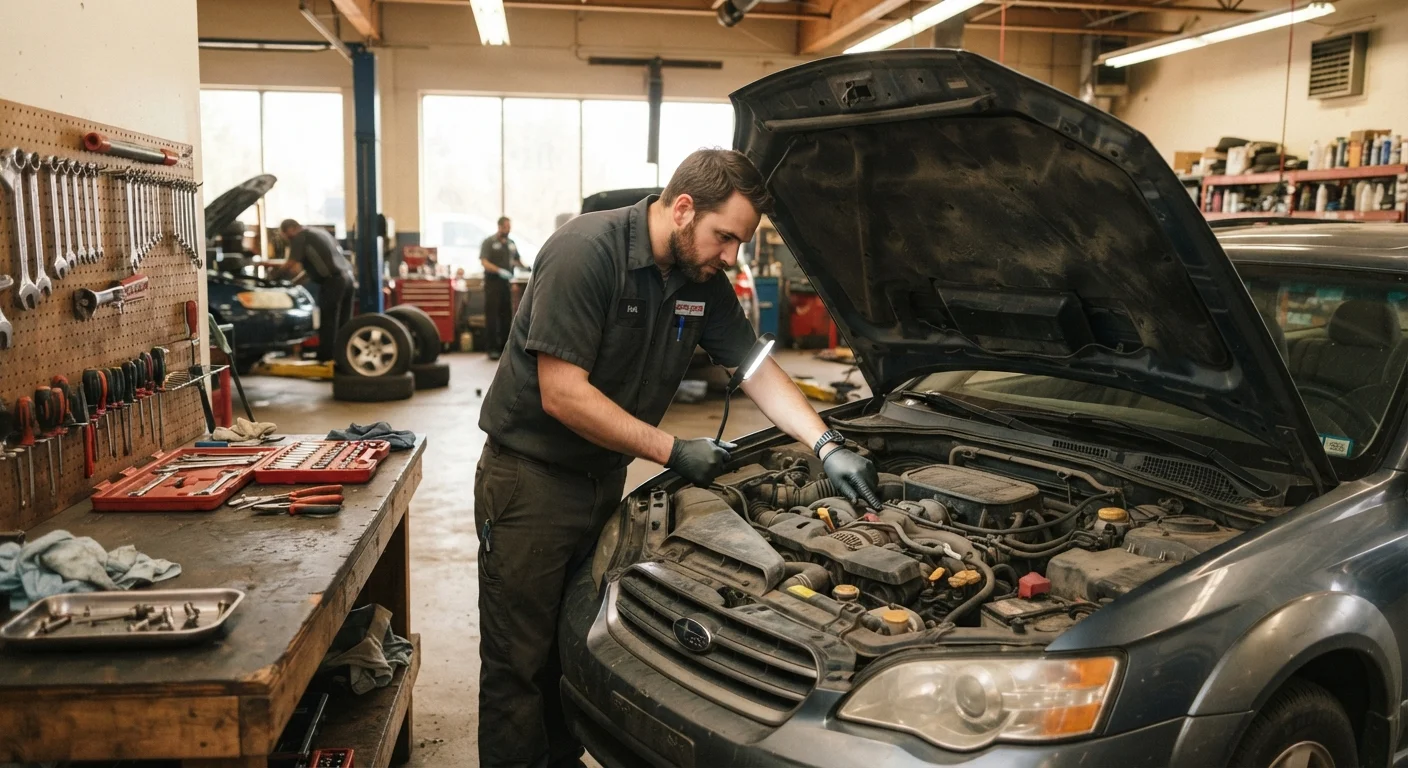
Photo: findbestways.com editorial
Key Takeaways
- A thorough inspection at the time of purchase reveals deferred maintenance before it becomes your problem.
- Fluid condition tells you as much as fluid level; dark, gritty, or burnt fluid signals neglect.
- Tires, brakes, and suspension wear faster on used cars because their history is often unknown.
- The owner's manual sets the actual service schedule; marketing claims from quick-lube shops often do not.
- Higher-mileage vehicles have predictable failure points that inspection and preventive replacement can address.
- A written log of every service makes future diagnosis faster and protects resale value.
Starting point: what to check when you first get a used car
The condition of a used car at the moment you take ownership reflects decisions made by someone else. Deferred oil changes, ignored warning lights, and missed inspections all become your responsibility the moment the title transfers. A systematic initial inspection prevents those inherited problems from compounding.
Start with a full visual scan: look under the car for fresh fluid spots, check the body panels for signs of prior collision repair (mismatched paint, uneven panel gaps), and open every door and the trunk to inspect seals and drainage channels. Inside, check that every warning light extinguishes after startup. A light that stays on is not a minor inconvenience; it is a stored diagnostic code that a mechanic can read with an OBD-II scanner (a device that retrieves fault codes from the car's onboard computer).
Pull the service records if the seller has them. If none exist, assume the car is due for every major interval item: engine oil, transmission fluid, coolant, brake fluid, air filter, cabin air filter, and spark plugs. Paying for a pre-purchase inspection by an independent mechanic, typically between $100 and $150, is money that comes back many times over in avoided surprises.
When you buy a used car with no service history, ask a mechanic to pull stored fault codes even if no warning lights are on. Codes can sit in memory without triggering a light, and they reveal problems the previous owner may have cleared manually.
When checking coolant, do it only when the engine is cold. Removing the radiator cap on a hot engine releases pressurized fluid that can cause serious burns.
The fluids that matter most
Fluids are the circulatory system of a vehicle. Each one has a condition threshold, not just a level. Pull the oil dipstick: clean oil is amber and translucent; oil that is black and gritty has been running too long. Transmission fluid should be red or pink and should not smell burnt. Coolant (the liquid in the radiator and overflow tank) should be green, orange, or pink depending on type, and should never look rusty or have particles floating in it.
Brake fluid absorbs moisture over time, which lowers its boiling point and can cause brake fade under hard use. Most manufacturers recommend replacement every two years regardless of mileage. Power steering fluid, if your vehicle has a hydraulic system rather than electric assist, should be checked for discoloration and topped to the marked level.
For a detailed breakdown of common misconceptions about service intervals for each of these fluids, the guide to car fluid myths is worth reading before you decide what to change and when. Skipping a fluid change to save $30 today can produce a repair bill in the hundreds or thousands later, as this honest look at deferred maintenance costs explains.
Tires, brakes, and suspension
These three systems share one job: keeping the car in contact with the road and stopping it when asked. On a used vehicle, all three need immediate, independent evaluation.
Tire tread depth is measured with a gauge or the quarter-coin test: insert a quarter into any groove with Washington's head pointing down. If you can see the top of his head, the tire is at or near the minimum safe depth. Also check for uneven wear patterns: wear on the edges only suggests chronic underinflation, while wear in the center suggests overinflation. Diagonal or cupped wear often points to a suspension or alignment problem.
Brake pads have a wear indicator, a small metal tab that produces a high-pitched squeal when the pad material wears thin. If you hear grinding rather than squealing, the pads are gone and the rotors (the steel discs the pads clamp against) may be damaged. Both conditions need immediate attention. Suspension components, including ball joints, tie rods, control arm bushings, and shock absorbers, are harder to evaluate without lifting the car. A bounce test (push down hard on each corner and release) gives a rough sense: more than one or two rebounds after release suggests worn shocks or struts.
Service intervals and the owner's manual
The owner's manual is the single most authoritative source for service intervals on any vehicle. It accounts for the engine design, transmission type, cooling system capacity, and the conditions the manufacturer tested against. Generic advice from a quick-lube shop sign or a well-meaning friend may not match what the vehicle actually needs.
Most modern vehicles list two maintenance schedules: normal and severe. Severe service covers short trips under five miles, frequent stop-and-go driving, towing, dusty environments, and extreme temperatures. Many urban drivers fall into the severe category without realizing it, which means shorter oil change intervals and more frequent inspections of certain components.
A few tasks are straightforward enough that most drivers can handle them without a shop visit. Air filter replacement, wiper blade replacement, and cabin air filter changes are among the most common. The overview of DIY maintenance tasks covers which jobs are realistic for most owners and which ones are better left to a professional.
Common failure points on higher-mileage vehicles
Used cars with 80,000 miles or more have components approaching or past their expected service life. Knowing where failures concentrate lets you inspect and replace proactively rather than reactively.
Timing belts (not present on all engines, but common on many four-cylinder designs) have an interval, often between 60,000 and 100,000 miles, after which failure is not a question of if but when. A broken timing belt can destroy an engine in seconds. If there is no record of replacement and the vehicle is in that mileage range, treat it as overdue.
Coolant hoses and serpentine belts (the single belt that drives the alternator, power steering pump, and air conditioning compressor) are made of rubber that degrades with heat cycling. Inspect them for cracks, fraying, or glazing. Oxygen sensors, which help the engine control fuel delivery, often fail between 80,000 and 100,000 miles and will trigger a check-engine light. Replacing them before they fail prevents the fuel economy loss and potential catalytic converter damage that a failing sensor can cause.
Timing belt failure can destroy your engine
Building a maintenance strategy that holds
Consistency matters more than perfection. A car serviced on a slightly extended schedule but without gaps will generally outlast one that gets intensive care followed by long periods of neglect.
Keep a physical or digital log of every service: the date, mileage, what was done, and what it cost. This log serves two purposes. For day-to-day ownership, it tells you exactly what is coming due next. For resale, it is tangible proof that the car was maintained, which buyers and dealers both weigh when making offers.
Set calendar reminders for each interval item. Oil changes are easy to remember because shops often put a sticker on the windshield, but transmission fluid, coolant, and brake fluid changes have no equivalent prompt. A simple spreadsheet with mileage targets handles this without any special software.
Interior condition matters too, not just for comfort but because moisture, food debris, and UV damage degrade materials that are expensive to restore. The practical interior care habits guide outlines simple, low-cost routines that protect upholstery, trim, and carpeting over the long term.
Finally, pay attention to what the car tells you. New noises, changes in ride quality, longer stopping distances, and dashboard lights are all signals. Acting on them early almost always costs less than waiting until the system fails completely.
The content provided on our blog site traverses numerous categories, offering readers valuable and practical information. Readers can use the editorial team’s research and data to gain more insights into their topics of interest. However, they are requested not to treat the articles as conclusive. The website team cannot be held responsible for differences in data or inaccuracies found across other platforms. Please also note that the site might also miss out on various schemes and offers available that the readers may find more beneficial than the ones we cover.