
Car Maintenance Tasks You Can Realistically Do Yourself

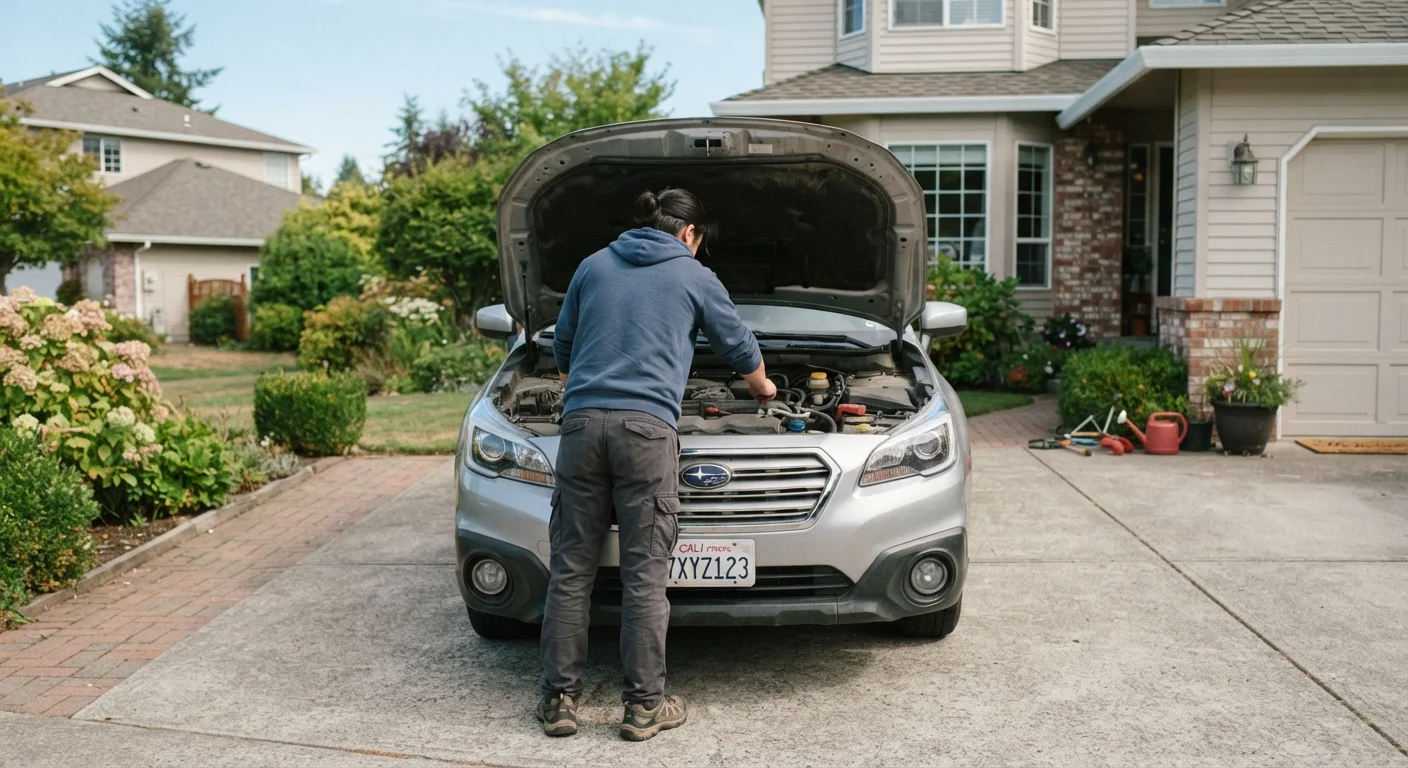
Photo: findbestways.com editorial
Key Takeaways
- Several routine car maintenance tasks require no special tools and can be completed in under 30 minutes.
- Doing tasks like wiper blade replacement and air filter swaps yourself avoids shop labor fees.
- Your owner manual is the most reliable guide for intervals, part specifications, and fluid types.
- Some tasks carry safety implications and are better left to a qualified mechanic.
What you can handle without a shop visit
Most drivers send their vehicles to a shop for every maintenance item out of habit or uncertainty, not because the jobs are inherently difficult. A meaningful number of routine tasks require little more than basic hand tools, the correct replacement part, and a clean place to work. Doing them yourself avoids shop labor fees and gives you direct knowledge of your vehicle's condition.
The tasks below are realistic for most drivers. None requires advanced mechanical training, though some call for more care than others. Skipping routine maintenance costs more than most drivers realize, so even handling a subset of these jobs at home moves the needle.
Start with your owner manual
Replace wiper blades
Wiper blades wear out gradually, so the drop-off in performance can be easy to miss until visibility is genuinely poor in rain. Replacement is one of the most straightforward jobs on any vehicle: lift the wiper arm, press the release tab on the blade, slide the old blade off, and click the new one into place. The whole process typically takes under ten minutes.
Check your owner manual or the packaging at an auto parts store for the correct blade length, since the driver and passenger sides often differ. Some vehicles also use a different connector style on the rear wiper. Inspect blades at least twice a year, before rainy and winter seasons, and replace them if you see streaking, skipping, or a smearing film.
Wiper blade replacement takes under ten minutes and requires no tools.
Swap the engine air filter
A clogged engine air filter restricts airflow to the engine, which can affect fuel efficiency and acceleration over time. The filter itself is inexpensive, and on most vehicles it lives inside a plastic housing secured by clips or a few screws. Open the housing, note how the old filter sits, and drop the new one in the same orientation. Close the housing and you are done.
Intervals vary by manufacturer, but a common guideline is every 15,000 to 30,000 miles. Driving on dusty roads or gravel tracks shortens that window. The filter is easy to inspect visually: a heavily gray or brown filter with visible debris is ready to be replaced. For the correct part number, use your owner manual or the vehicle year, make, and model lookup tools at most auto parts retailers.
A clogged air filter can affect fuel efficiency and is simple to inspect and replace at home.
Replace the cabin air filter
Separate from the engine air filter, the cabin air filter cleans air that flows through the heating, ventilation, and air conditioning (HVAC) system into the passenger compartment. A dirty cabin filter can reduce airflow from vents and allow more dust and pollen into the cabin. Most cabin filters are behind the glove compartment or under the dashboard, accessible without tools once you know where to look.
Your owner manual will show the filter location and the replacement interval, which is commonly every 15,000 to 25,000 miles. This is a good task to pair with an engine air filter check so you do not have to revisit it separately. Interior care habits like this one help maintain a cleaner, fresher cabin environment over the long term.
Replacing the cabin air filter takes minutes and noticeably improves airflow through your vents.
Check and top off fluids
Checking fluid levels takes about five minutes and tells you a lot about your vehicle's health. Engine oil, coolant, brake fluid, power steering fluid (on vehicles that have it), and windshield washer fluid all have visible reservoir markings that indicate correct levels. Most checks require only opening the hood and pulling a dipstick or reading a translucent reservoir.
Topping off windshield washer fluid is entirely straightforward. For engine oil, brake fluid, and coolant, use the exact type specified in your owner manual, since mixing incompatible fluids can cause damage. Common car fluid myths trip up many drivers, so it is worth reading up before adding anything to the brake or cooling system. If a fluid level is consistently dropping, that points to a leak or mechanical issue worth having a mechanic inspect.
Fluid checks take five minutes but can flag a developing problem before it becomes expensive.
Inspect and inflate tires
Tire pressure affects handling, fuel efficiency, and tire lifespan. Most vehicles have the recommended tire pressure printed on a sticker inside the driver's door jamb, not on the tire sidewall (the sidewall lists the tire's maximum pressure, which is different). A basic tire pressure gauge costs a few dollars and is accurate enough for this check.
Check pressure when tires are cold, meaning the vehicle has been parked for at least three hours or driven fewer than a mile. Pressure drops roughly one pound per square inch (PSI) for every 10-degree Fahrenheit drop in ambient temperature, so seasonal checks matter. While you are at it, examine tread depth using a penny: if the top of Lincoln's head is visible when inserted into the tread groove, the tire is worn to about 2/32 inch and should be replaced. Look for uneven wear patterns, which can indicate alignment or suspension problems worth investigating.
Cold tire pressure checks take less than five minutes and directly affect fuel use and tire life.
Replace a dead battery (with caveats)
Battery replacement is within reach for many home mechanics, but it comes with a few things to keep in mind. On older and simpler vehicles, the process is: disconnect the negative cable first, then the positive, remove the hold-down bracket, lift out the old battery, place the new one in, and reconnect in reverse order (positive first, then negative). A battery terminal cleaner brush, available at any auto parts store, helps remove corrosion before you reconnect.
On newer vehicles with advanced electronics, disconnecting the battery can reset stored settings, disable certain systems, or require dealer reprogramming. Some vehicles also use battery management systems that need to be configured when a new battery is installed. Before attempting this on a newer model, consult your owner manual and check whether a mechanic or dealer visit is more appropriate. Battery group size and cold cranking amps (CCA) must match manufacturer specifications, so confirm the correct part before purchasing.
Replacing a battery is manageable on older vehicles, but newer models may need professional reconfiguration.
Change a burnt-out exterior bulb
Tail lights, brake lights, and turn signal bulbs are generally accessible through the trunk or hatch liner without removing any exterior trim. Headlight bulb replacement is more accessible on some vehicles than others. On modern cars with LED or HID (high-intensity discharge) headlights, replacement often requires professional service. For conventional halogen bulbs, the job is usually a matter of removing a housing cover, disconnecting the wiring connector, twisting out the old bulb, and inserting the new one.
When handling halogen bulbs, avoid touching the glass with bare fingers. Skin oils create a hot spot on the glass that can shorten bulb life significantly. Use a clean cloth or gloves when handling the new bulb. Verify that the replacement bulb matches the type and wattage in your owner manual. If both bulbs on one side fail at the same time, the issue is likely electrical rather than the bulbs themselves.
Tail light and brake light bulb swaps are accessible to most home mechanics on conventional vehicles.
Building a sustainable maintenance habit
Doing any of these tasks once is useful. Doing them on a consistent schedule is what keeps a vehicle reliable. Set calendar reminders tied to mileage milestones or seasons rather than waiting for a warning light or visible problem. A complete maintenance plan covers more ground than individual tasks alone, so use the owner manual intervals as the backbone of your schedule.
Each time you work on the vehicle yourself, you learn more about how it operates and what normal looks like. That knowledge makes it easier to catch something unusual early, before it becomes a more involved repair.
Know when to stop and call a mechanic
The content provided on our blog site traverses numerous categories, offering readers valuable and practical information. Readers can use the editorial team’s research and data to gain more insights into their topics of interest. However, they are requested not to treat the articles as conclusive. The website team cannot be held responsible for differences in data or inaccuracies found across other platforms. Please also note that the site might also miss out on various schemes and offers available that the readers may find more beneficial than the ones we cover.