
The Trade-Offs of Skipping Routine Car Maintenance

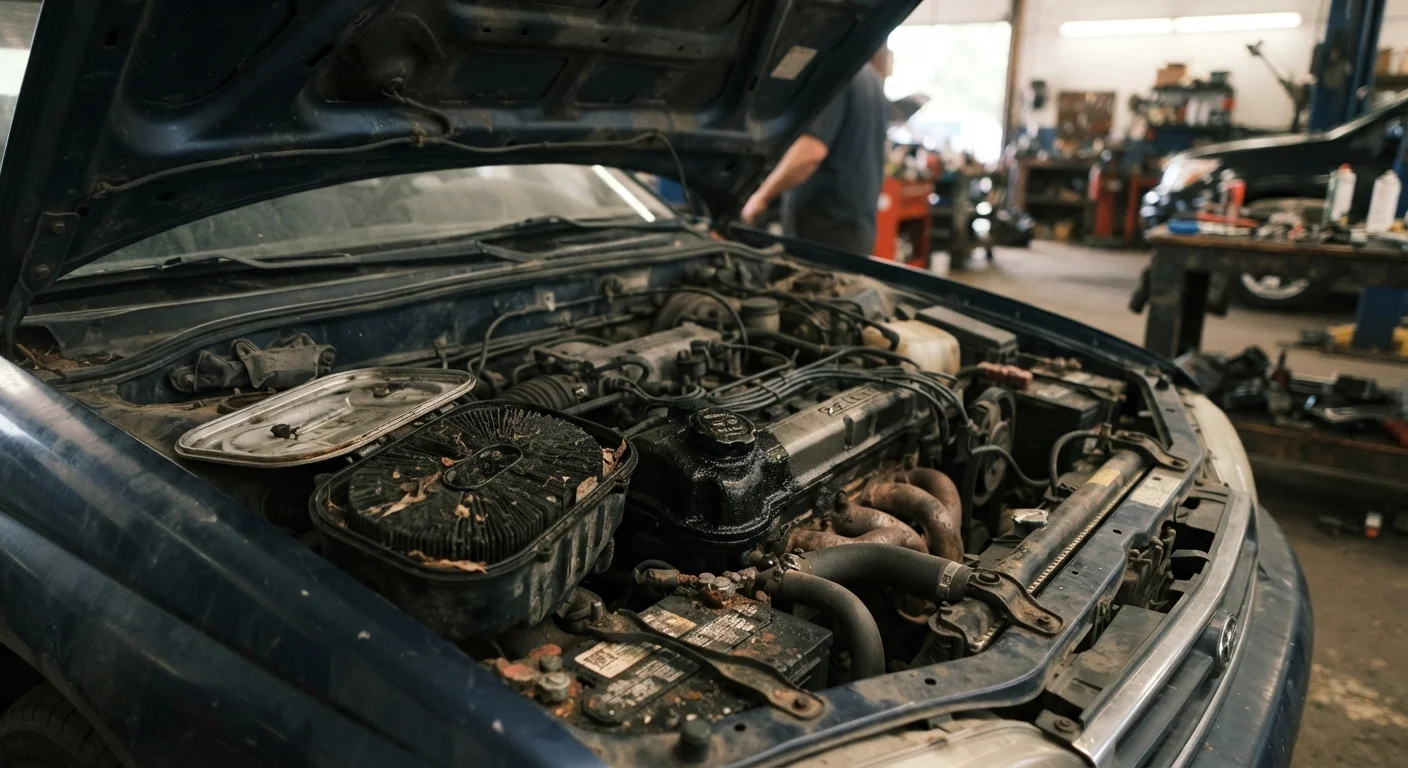
Photo: findbestways.com editorial
Key Takeaways
- Skipping routine maintenance can save money short-term but typically raises repair costs over time.
- Oil, filters, and tire rotations are among the lowest-cost services with the highest failure consequences if ignored.
- Some drivers legitimately stretch intervals based on driving conditions and manufacturer guidance, but this requires active monitoring.
- Neglected maintenance can void powertrain warranties and reduce resale value.
Immediate reduction in out-of-pocket spending
Skipping a service means that specific cost does not appear this month. For drivers facing a tight budget, deferring a non-urgent service can free cash for other obligations.
Some manufacturer intervals allow longer gaps than older habits suggest
Modern synthetic oils and improved engine tolerances have extended recommended oil change intervals in many vehicles to 7,500 or 10,000 miles, meaning some drivers were already over-servicing.
Low-consequence services can be safely deferred short-term
Cabin air filters and wiper blades have no direct mechanical failure risk if replaced a few thousand miles or weeks beyond schedule, giving budget flexibility without meaningful mechanical exposure.
Accelerated engine wear from degraded oil
Oil breaks down over time and mileage, losing viscosity and accumulating contaminants. Running an engine on degraded oil increases friction and wear on bearings and cylinder walls, damage that is cumulative and largely irreversible.
Small problems become expensive failures
A worn serpentine belt, caught at a routine inspection, costs a fraction of the repair bill after it snaps and leaves a driver stranded. Routine services act as a regular inspection that catches developing issues before they escalate.
Reduced resale and trade-in value
Buyers and dealers look at service records. A vehicle with incomplete or absent maintenance history typically draws lower offers, and the gap can exceed the cost of the services that were skipped.
Risk of voiding powertrain warranty coverage
Most manufacturer and extended warranties require maintenance at specified intervals with documentation. Gaps in service records can justify denial of a warranty claim on a covered component.
Compounding costs from secondary damage
Neglecting one system often damages adjacent components. Skipping a coolant flush can lead to corrosion inside the cooling system; a clogged fuel filter strains the fuel pump. Secondary repairs cost far more than the original service.
What routine maintenance actually covers
Routine maintenance includes any scheduled service your vehicle's manufacturer specifies to keep the engine, drivetrain, and safety systems operating within design tolerances. Common items are oil and filter changes, air filter and cabin filter replacements, tire rotations, brake inspections, coolant flushes, and spark plug replacements.
These services are timed by mileage, months, or both, and they appear in your owner's manual under a maintenance schedule. That schedule reflects engineering decisions about wear rates and fluid degradation, not arbitrary upselling. Understanding what each service does makes it easier to weigh the real cost of skipping it. For a detailed look at which tasks you may be able to handle yourself, see car maintenance tasks you can realistically do yourself.
The case for skipping or delaying services
Immediate reduction in out-of-pocket spending
Skipping a service means that specific cost does not appear this month. For drivers facing a tight budget, deferring a non-urgent service can free cash for other obligations.
Some manufacturer intervals allow longer gaps than older habits suggest
Modern synthetic oils and improved engine tolerances have extended recommended oil change intervals in many vehicles to 7,500 or 10,000 miles, meaning some drivers were already over-servicing.
Low-consequence services can be safely deferred short-term
Cabin air filters and wiper blades have no direct mechanical failure risk if replaced a few thousand miles or weeks beyond schedule, giving budget flexibility without meaningful mechanical exposure.
Some of these advantages are genuine, at least in the short term or under specific conditions. Drivers who log mostly highway miles in a moderate climate, for example, may find their oil degrades more slowly than city drivers who make frequent short trips. Manufacturer maintenance schedules have also extended considerably over the past two decades, so some older habits around very frequent servicing are now outdated. See common car fluid myths that lead to expensive mistakes for more context on interval misconceptions.
The costs that accumulate when maintenance is skipped
Accelerated engine wear from degraded oil
Oil breaks down over time and mileage, losing viscosity and accumulating contaminants. Running an engine on degraded oil increases friction and wear on bearings and cylinder walls, damage that is cumulative and largely irreversible.
Small problems become expensive failures
A worn serpentine belt, caught at a routine inspection, costs a fraction of the repair bill after it snaps and leaves a driver stranded. Routine services act as a regular inspection that catches developing issues before they escalate.
Reduced resale and trade-in value
Buyers and dealers look at service records. A vehicle with incomplete or absent maintenance history typically draws lower offers, and the gap can exceed the cost of the services that were skipped.
Risk of voiding powertrain warranty coverage
Most manufacturer and extended warranties require maintenance at specified intervals with documentation. Gaps in service records can justify denial of a warranty claim on a covered component.
Compounding costs from secondary damage
Neglecting one system often damages adjacent components. Skipping a coolant flush can lead to corrosion inside the cooling system; a clogged fuel filter strains the fuel pump. Secondary repairs cost far more than the original service.
2x-3x
Cost multiplier when brake pads wear into rotors
Automotive repair data consistently shows that replacing both pads and rotors costs roughly two to three times more than replacing pads alone at the correct interval.
$4,000+
Typical engine repair cost from oil neglect
Engine repairs related to lubrication failure, including bearing replacement and sludge removal, frequently exceed $4,000 depending on the vehicle, according to repair cost surveys from AAA.
The failure modes here are not hypothetical. Engine sludge from degraded oil is one of the more common causes of premature engine failure in vehicles that otherwise have no structural defects. Worn brake pads that eat into rotors turn a modest pad replacement into a rotor replacement as well, doubling or tripling the cost. Tire neglect compounds: uneven wear from skipped rotations shortens tire life and can mask alignment problems that stress suspension components.
Warranty exposure deserves particular attention. Most powertrain warranties require documented maintenance at the manufacturer's specified intervals. Gaps in service records can give an insurer or manufacturer grounds to deny a warranty claim. This matters most in the first few years of ownership. For a broader picture of used vehicle upkeep, everything involved in keeping a used car running well covers the full service lifecycle.
How to make an informed decision about deferral
Your owner's manual is the right reference
Not every deferred service carries the same risk. Oil changes and brake inspections sit at the high end of consequence if skipped. Cabin air filter replacements, by contrast, affect comfort and HVAC efficiency but rarely cause mechanical failure. Knowing the difference allows a budget-conscious driver to prioritize without ignoring the vehicle entirely.
Driving habits matter too. Short trips under five miles are harder on oil than long highway runs because the engine never fully warms up and combustion byproducts accumulate in the oil faster. A driver who makes ten short trips a week should not stretch oil intervals simply because a neighbor who commutes sixty highway miles a day does so without issue.
If budget pressure is the reason for deferral, it may be worth comparing the cost of a routine service against the deductible and inconvenience of an emergency repair. The math rarely favors skipping, though spreading services out over a few weeks rather than missing them entirely is a reasonable middle ground when cash flow is tight.
The content provided on our blog site traverses numerous categories, offering readers valuable and practical information. Readers can use the editorial team’s research and data to gain more insights into their topics of interest. However, they are requested not to treat the articles as conclusive. The website team cannot be held responsible for differences in data or inaccuracies found across other platforms. Please also note that the site might also miss out on various schemes and offers available that the readers may find more beneficial than the ones we cover.