
Screen Time at Night: What the Research Actually Shows

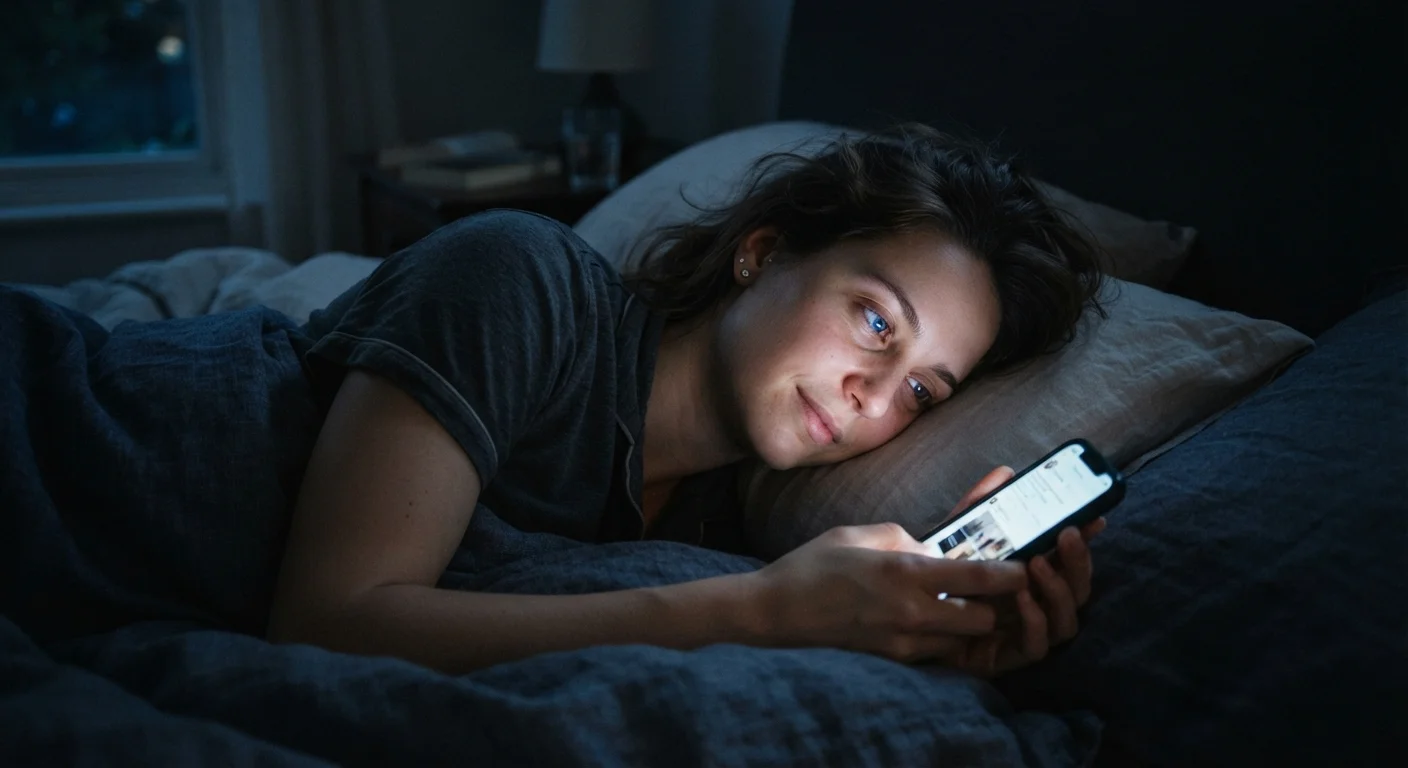
Photo: findbestways.com editorial
Key Takeaways
- Blue light from screens has a measurable but modest effect on melatonin suppression in most adults.
- The content you consume at night may disrupt sleep more than the light itself.
- Night mode and display filters reduce blue light output but have not shown large sleep benefits in controlled studies.
- Individual sensitivity to evening light varies considerably based on chronotype and age.
- Consistent sleep and wake times matter more than any single screen habit.
Why evening screens became a sleep villain
The idea that phones and tablets ruin sleep took hold quickly, and it is not entirely wrong. Research published in the early 2010s showed that short-wavelength blue light, the kind LED screens emit, can suppress melatonin production and shift the timing of the body's internal clock. That finding was real, but the popular version of it grew well beyond what the studies actually supported.
Most of those early experiments exposed participants to bright light sources at close range for extended periods, conditions that do not map neatly onto checking a phone in a dim room for twenty minutes. Subsequent work has produced more mixed results, and researchers continue to debate how much real-world screen use at night actually disrupts sleep for the average adult.
If you want to understand how your evening habits connect to how you wake up, it helps to know which parts of the screen-sleep story hold up and which do not. The related question of how morning habits can reinforce a stable sleep pattern is covered in building a morning routine that supports your health.
What the myths get wrong
Several common beliefs about screens and sleep are either overstated or flatly inaccurate. The pairs below lay out the misconception and what current evidence actually says.
Myth
All screen light is equally disruptive to sleep.
Fact
Blue light has a stronger effect on melatonin timing than red or amber light, but most consumer screens emit far less blue light than the laboratory conditions used in early studies.
The concern about blue light is grounded in real physiology. Melanopsin-containing cells in the retina are sensitive to short-wavelength light and feed directly into the circadian system. However, the intensity and duration of exposure matter as much as the wavelength. A phone held at reading distance in a dim room delivers a fraction of the light used in controlled lab exposures. This does not mean screens are harmless, but it does mean the effect is likely smaller than headlines imply for typical use.
Myth
Night mode and blue-light-filtering apps fix the sleep problem.
Fact
Reducing blue light output through software filters has shown limited benefit for sleep in controlled trials, and some studies found no significant difference compared to unfiltered screens.
A randomized controlled study published in Sleep Medicine in 2021 found that participants using night mode did not sleep better than those who did not. The filters do reduce blue light emission, but they may not reduce it enough to meaningfully change melatonin timing, and they do nothing about the alerting effect of engaging content. Using night mode is unlikely to cause harm, but treating it as a reliable sleep fix is not supported by current evidence.
Myth
Two hours of screen-free time before bed is the research-backed standard.
Fact
No single duration has been established as optimal by clinical research. The two-hour figure circulates widely but does not come from a specific consensus recommendation.
Sleep hygiene guidelines from organizations such as the American Academy of Sleep Medicine do suggest winding down before bed, but they do not specify a universal screen-free window of exactly two hours. Individual responses vary considerably. Some people fall asleep easily after using a device; others find even brief exposure alerting. The more useful question is whether your screen use is displacing sleep time or raising arousal before bed, both of which have stronger evidence behind them than light exposure alone.
Myth
The light from screens is the main reason they disrupt sleep.
Fact
The content and psychological engagement of screen use are at least as likely to disturb sleep as the light itself, and possibly more so in real-world conditions.
Watching something suspenseful, reading upsetting news, or checking work email activates the stress response and raises cortisol. That physiological arousal delays sleep onset independently of any light effect. Social media use in particular has been associated with racing thoughts and delayed sleep in survey-based research, a pattern that would occur even with no blue light at all. Separating the light effect from the content effect is difficult in practice, which is why lab studies using neutral content may underestimate real-world disruption for some people.
Myth
Children and adults are equally sensitive to evening screen light.
Fact
Children and adolescents show stronger melatonin suppression in response to evening light than most adults, making screen timing more consequential for younger users.
The lens of a child's eye transmits more blue light than an adult's, and adolescents have later natural chronotypes combined with earlier school start times, creating a narrow margin. Research suggests that the same screen exposure produces greater hormonal disruption in younger people. Parents and caregivers considering screen limits for children are advised to consult a pediatric healthcare provider, as general adult guidance does not translate directly to younger age groups.
What actually matters more than your screen
Sleep researchers point to a handful of factors that consistently outweigh device use in studies on sleep quality. Irregular sleep and wake times are among the most disruptive. When wake times shift by more than an hour across the week, the circadian system struggles to stabilize, regardless of what you were doing before bed. The phenomenon is examined in more detail in why your sleep schedule falls apart on weekends.
Room temperature, alcohol consumption, caffeine timing, and overall sleep debt all have stronger associations with poor sleep in the research literature than screen exposure alone. Anxiety and rumination before bed, regardless of whether a screen triggered them, are also well-documented disruptors.
Your natural chronotype shapes when your body is primed for sleep and wakefulness, and fighting that rhythm creates its own problems. Working with your natural energy rhythm can be more effective than focusing narrowly on device rules.
This article is for informational purposes only and is not medical advice. If you have persistent sleep difficulties, speak with a qualified healthcare professional.
The content provided on our blog site traverses numerous categories, offering readers valuable and practical information. Readers can use the editorial team’s research and data to gain more insights into their topics of interest. However, they are requested not to treat the articles as conclusive. The website team cannot be held responsible for differences in data or inaccuracies found across other platforms. Please also note that the site might also miss out on various schemes and offers available that the readers may find more beneficial than the ones we cover.