
Why Meal Planning Saves More Than Money

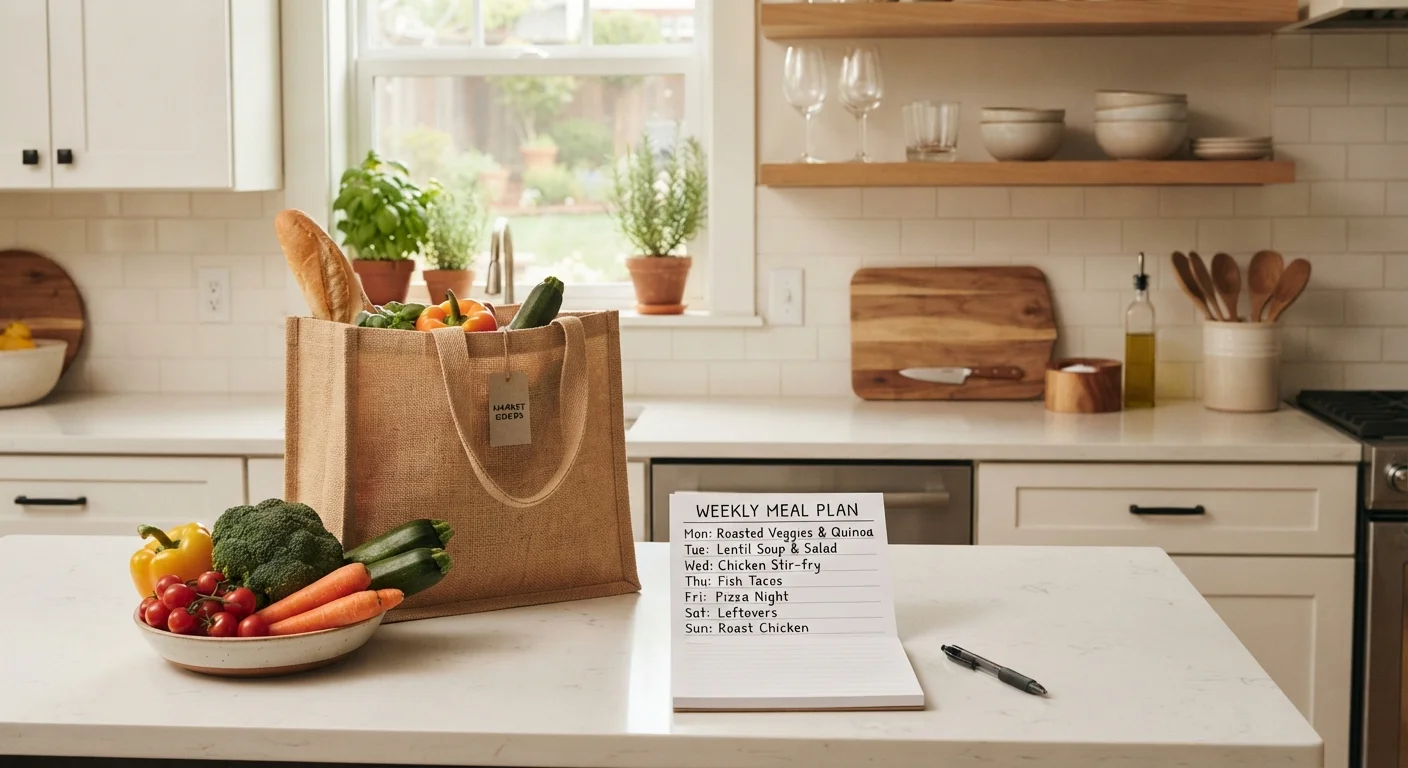
Photo: findbestways.com editorial
Key Takeaways
- Meal planning reduces impulse grocery purchases and overall food spending.
- Deciding meals in advance lowers daily decision fatigue significantly.
- Planned meals produce less food waste because ingredients get used intentionally.
- A weekly plan makes it easier to eat consistently without relying on takeout.
- The time invested in planning is typically offset by time saved during the week.
What meal planning actually does
Most people associate meal planning with cutting grocery bills, and it does accomplish that. But the financial savings are one output of a deeper change in how food decisions get made. When meals are chosen before you are hungry, rushed, or standing in a grocery aisle, the choices are more deliberate and less reactive.
Unplanned food spending is largely a product of friction. Without a plan, households face the same question multiple times a day: what are we eating? Each answer has a cost, whether it is a convenience purchase, an unneeded ingredient, or a takeout order at 6 p.m. because no one defrosted anything. Meal planning removes that recurring friction by front-loading the decisions to one focused session per week.
This also has a measurable effect on how much food gets thrown away. The U.S. Department of Agriculture has estimated that a substantial portion of food purchased by households goes uneaten. Buying ingredients tied to a specific plan means those items have a purpose and a deadline, which reduces the chance they spoil before anyone uses them.
The mental load it reduces
Food decisions are among the most repeated choices in a typical day. What to eat for lunch, whether there is enough for dinner, whether a grocery run is needed before tomorrow: these small decisions accumulate. Research on cognitive load consistently finds that repeated decision-making draws on the same mental resources as more demanding tasks.
Meal planning consolidates these micro-decisions into a single weekly block. Once the week is mapped out, the question of what to eat is largely settled. This frees attention for other priorities throughout the day, and it reduces the kind of low-grade stress that comes from feeling perpetually behind on basic household logistics.
For households managing work schedules, children, or health-related dietary needs, that reduction in daily friction is often worth more than the dollar savings. A structured daily routine and a planned dinner schedule reinforce each other: both work by removing recurring decisions before they have a chance to drain energy.
Start with one meal category
How it changes grocery shopping
Shopping with a list built from a meal plan changes the entire dynamic of a grocery trip. The list is specific, so the cart tends to stay focused. Items without a planned use are easier to skip because there is no immediate occasion for them. This is the mechanism behind most of the spending reduction: not discipline, just clarity about what is actually needed.
It also shortens shopping time. A focused list means fewer passes through the store and less time weighing purchases that will not serve a clear purpose. Households that plan also make fewer mid-week emergency trips, which are a consistent source of impulse spending. Much like the way deferred maintenance on a car creates larger costs later (as explored in this look at routine car upkeep), deferred meal planning tends to create larger food bills over time.
Subscription and convenience spending is another area where planning creates savings. When there are planned meals at home, the temptation to pay for a last-minute delivery or convenience meal is lower. The cost of convenience is a pattern worth watching across household budgets, and meal planning is one of the more direct ways to reduce it.
Building a plan that holds up through the week
A meal plan works when it is realistic, not when it is ambitious. Plans that require extensive daily prep or assume energy levels that do not materialize get abandoned by Wednesday. A practical plan accounts for the actual shape of the week: which nights are busy, which days allow more cooking time, and which meals can be made in batches to cover two nights.
Batch cooking, where a protein or grain is prepared once and used across multiple meals, is one of the most efficient ways to hold a plan together under a realistic schedule. A pot of beans or a sheet pan of roasted vegetables made on Sunday carries into lunches and dinners through mid-week without requiring full meals to be cooked each night.
Flexibility matters too. Leaving one or two nights open as a planned leftovers night or a simple fallback meal prevents the whole week from unraveling when plans shift. A rigid plan that breaks down by Thursday is less useful than a flexible one that holds 80 percent of the time.
30-40%
Share of U.S. food supply that goes uneaten
The USDA estimates that between 30 and 40 percent of the food supply in the United States is wasted, with household-level decisions being a major contributing factor.
$1,500+
Average annual household food waste cost
The USDA has estimated that the average American family of four loses roughly $1,500 or more per year to food that is bought but never eaten.
1 in 3
Households that shop without a list
Consumer behavior surveys have consistently found that a significant share of grocery shoppers make trips without a prepared list, which correlates with higher impulse spending.
Frequently Asked Questions
The content provided on our blog site traverses numerous categories, offering readers valuable and practical information. Readers can use the editorial team’s research and data to gain more insights into their topics of interest. However, they are requested not to treat the articles as conclusive. The website team cannot be held responsible for differences in data or inaccuracies found across other platforms. Please also note that the site might also miss out on various schemes and offers available that the readers may find more beneficial than the ones we cover.