
Low-Maintenance Perennials That Thrive in American Home Gardens

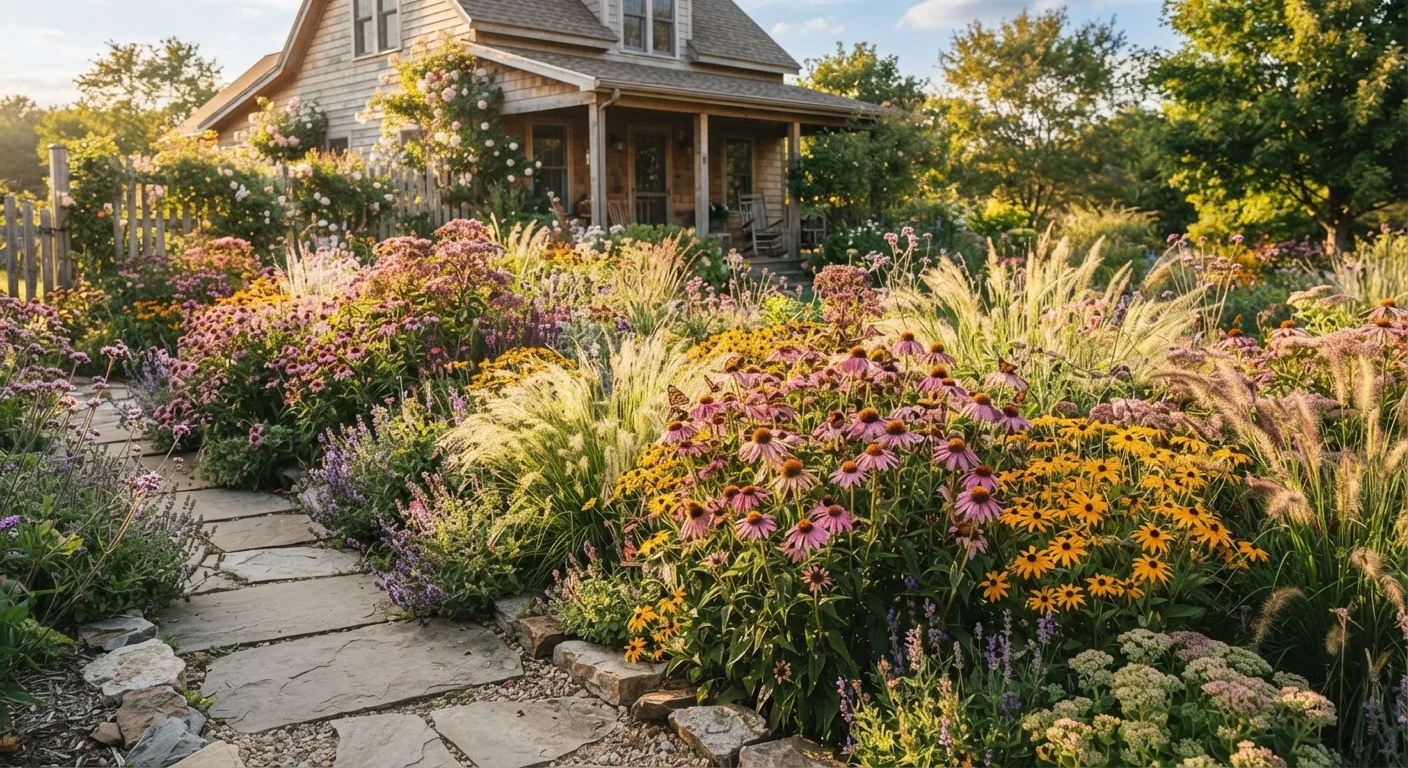
Photo: findbestways.com editorial
Key Takeaways
- Perennials return each growing season, cutting the cost of annual replanting over time.
- Most low-maintenance perennials tolerate drought once their root systems are established.
- Matching a plant to your USDA hardiness zone is the single biggest factor in long-term success.
- Deadheading and division are the main recurring tasks, and neither requires special tools.
- Combining plants with staggered bloom times gives continuous color from spring through fall.
Why perennials make sense for budget-conscious gardeners
Annual flowers look good in the nursery, but you buy them again every spring. Perennials cost more upfront and bloom less extravagantly in year one, but they return season after season from the same root system. Over three to five years, a well-chosen perennial border almost always costs less than the same square footage replanted with annuals each year.
The catch is that not every perennial is truly low-maintenance. Some need staking, frequent division, or precise soil conditions. The plants below were chosen because they tolerate a range of soil types, recover from missed watering, and do not require much intervention to look presentable. Before planting, check the USDA Plant Hardiness Zone Map for your zip code so the plants you choose can survive your winters without extra protection.
If you are working with a small outdoor space, the small-space gardening guide covers how to fit perennials into tight yards and balconies. For decisions about whether to plant in the ground or in raised beds, see the raised beds vs. in-ground comparison.
Start with three to five plants of one variety
Eight perennials worth planting
Coneflower (Echinacea purpurea)
Coneflower is native to the central and eastern United States, which means it is already adapted to the summer heat and periodic drought that stress many ornamental plants. It thrives in USDA zones 3 through 9, tolerates clay soil, and attracts pollinators from midsummer through early fall. The seed heads that remain after bloom provide food for goldfinches and add winter structure to the border. Cut plants back to a few inches in late fall or leave the stalks standing until early spring.
Native to the central U.S., coneflower handles heat, drought, and clay soil without much help.
Black-eyed Susan (Rudbeckia hirta)
Black-eyed Susan blooms in yellow and gold from midsummer into early fall and is one of the most forgiving perennials you can plant. It grows in zones 3 through 9, spreads readily by self-seeding, and tolerates poor, dry soil where other plants struggle. The main task is thinning seedlings if the colony spreads beyond its intended area. Deadhead half the plant to extend blooms; leave the rest to reseed and attract birds.
Black-eyed Susan self-seeds reliably, filling gaps in a border with almost no effort.
Daylily (Hemerocallis)
Daylilies are among the most adaptable perennials available. They grow in zones 3 through 9, tolerate both sun and partial shade, and establish quickly in average garden soil. Each individual flower lasts one day, but a single plant produces dozens of buds over several weeks. Divide clumps every four to five years when the center starts to die out. Daylilies are toxic to cats, so position them accordingly if you have outdoor cats visiting the garden.
Daylilies establish fast and need division only every four to five years.
Salvia (Salvia nemorosa and related species)
Ornamental salvias produce upright spikes of purple or blue flowers in late spring and early summer. Cut the spent spikes back by half after the first flush, and most varieties will rebloom in late summer. They prefer well-drained soil and full sun, which makes them a good fit for slopes or areas that dry out quickly. Hardy in zones 4 through 8, they are also deer-resistant, a practical consideration in suburban and rural gardens.
Cutting salvia back after its first bloom almost always triggers a second flush in late summer.
Sedum (Hylotelephium, formerly Sedum spectabile)
Sedum, sometimes sold under the name stonecrop or autumn joy, is a succulent-like perennial that stores water in its thick leaves. It blooms in late summer and fall when most other perennials are finishing, and the dried seed heads hold their shape through winter. Sedum grows in zones 3 through 9, needs full sun and well-drained soil, and rarely needs watering once established. It is one of the few late-season bloomers that requires almost no deadheading.
Sedum blooms when most perennials have finished, extending garden color into fall.
Catmint (Nepeta x faassenii)
Catmint produces a long season of soft blue-purple flowers and aromatic grey-green foliage. It grows in zones 3 through 8, tolerates drought and poor soil, and spreads into a tidy mound that suppresses weeds. Shear it back by about a third after the first bloom period and it will flower again within a few weeks. It is also deer- and rabbit-resistant, which matters in gardens where browsing pressure is high.
Catmint suppresses weeds between other plants while providing long-lasting color.
Karl Foerster feather reed grass (Calamagrostis x acutiflora)
Ornamental grasses add vertical structure and movement to a garden without the maintenance of most flowering perennials. Karl Foerster is hardy in zones 4 through 9, grows in average soil, and tolerates both wet and dry conditions better than many grasses. The feathery plumes appear in early summer and remain attractive through winter. Cut the entire clump back to a few inches in late winter before new growth begins. Division is needed only every five to seven years.
Karl Foerster grass holds its structure through winter, adding off-season interest with no extra work.
Creeping phlox (Phlox subulata)
Creeping phlox covers bare ground with a mat of fine-textured foliage and produces a dense carpet of flowers in spring. It grows in zones 3 through 9, prefers full sun and well-drained soil, and is particularly useful on slopes where erosion can be a problem. After blooming, trim the plant lightly to keep it compact and encourage dense growth the following year. Once established, it crowds out most weeds and needs watering only during extended dry spells.
On slopes and bare spots, creeping phlox outcompetes weeds once its mat fills in.
Keeping your perennials healthy year to year
Most of the plants above need only two recurring tasks. Deadheading (removing spent flower heads before seeds form) directs energy back into roots and often extends the bloom period. Division, typically done every three to four years depending on the plant, prevents overcrowding and gives you free starts to fill other spots in the garden.
Fall is a good time to cut back most perennials, add a layer of compost, and note which plants need to be moved or divided in spring. The seasonal garden checklist walks through exactly what to do before winter arrives in temperate U.S. climates.
The content provided on our blog site traverses numerous categories, offering readers valuable and practical information. Readers can use the editorial team’s research and data to gain more insights into their topics of interest. However, they are requested not to treat the articles as conclusive. The website team cannot be held responsible for differences in data or inaccuracies found across other platforms. Please also note that the site might also miss out on various schemes and offers available that the readers may find more beneficial than the ones we cover.